Buy jean-lucdehaene.eu ?
We are moving the project
jean-lucdehaene.eu .
Are you interested in purchasing the domain
jean-lucdehaene.eu ?
domain@kv-gmbh.de · 0541-91531010
Buy jean-lucdehaene.eu ?
Was Yugoslavia a democracy?
Yugoslavia was officially a socialist federal republic, and its political system was based on the principles of self-management and workers' councils. While it had elements of a multi-party system and periodic elections, the Communist Party held a dominant position in the government and society. This limited the true democratic nature of the country, as the ruling party had significant control over political and social life. Therefore, while Yugoslavia had some democratic features, it did not fully function as a liberal democracy. **
What happened to Yugoslavia?
Yugoslavia was a country in Southeast Europe that existed from 1918 to 2003. It was formed after World War I and consisted of several different ethnic groups, including Serbs, Croats, and Bosniaks. However, ethnic tensions and political conflicts eventually led to the breakup of Yugoslavia in the 1990s. This breakup resulted in a series of violent conflicts, including the Bosnian War and the Kosovo War. By 2003, the remaining parts of Yugoslavia had all become independent nations, including Serbia, Croatia, Bosnia and Herzegovina, Montenegro, North Macedonia, and Slovenia. **


Similar search terms for Yugoslavia
Top-Angebote
Products related to Yugoslavia:
-
Banbo De Bruyne Belgium Fully Articulated FigurineStanding 20cm tall in his Belgium national team kit, this Banbo De Bruyne figurine captures one of football’s most complete midfielders in red, complete with articulation at the shoulders, hips, and neck for dynamic pose options. Whether displayed on a shelf or featured mid-celebration, every detail - from the authentic uniform to the realistic facial sculpting - reflects the precision expected from officially licensed sports merchandise. Football collectors and Belgium supporters will find this figurine equally suited to display and imaginative play. Each comes with an official team-branded football accessory, making it a self-contained collectors’ piece that pairs well with other players in the Banbo range, sold separately. • Multi-Point Articulation: Fully posable at the shoulders, hips, and neck for celebration poses and dynamic display angles. • Authentic Team Kit: Sculpted in Belgium’s official national team uniform with precise sponsor and kit detailing. • Included Football Accessory: Comes with an official Belgium team-branded football to complete the collectors’ display. • Realistic Facial Likeness: Hand-sculpted and painted to capture De Bruyne’s distinctive features with impressive accuracy. • Officially Licensed: An authorised merchandise product with full international licensing compliance. • Collector-Friendly Scale: At 20cm tall, sized perfectly for display on shelves, desks, or in fan collections alongside other figurines.20,49 £*Shipping: 0,00 £Secure redirect to the provider
-
Banbo Sockers Jeremy Doku Belgium 20cm Fully Articulated FigurineThe Doku Fully Articulated Figurine is a premium collectible designed with precision and authenticity. Measuring 20cm in height, this miniature figure reflects the highest standards of craftsmanship, offering full articulation for dynamic posing. Each figurine is presented in an official Belgium kit and includes a club-branded football, reinforcing its status as an officially licensed product. This collectible is a tribute to Jeremy Doku's legacy and is an essential item for serious football memorabilia collectors. - 20cm premium collectible figure - Full articulation for dynamic posing - Officially licensed, official kit - Includes club-branded football - Great gift for collectors and fans20,49 £*Shipping: 0,00 £Secure redirect to the provider
-
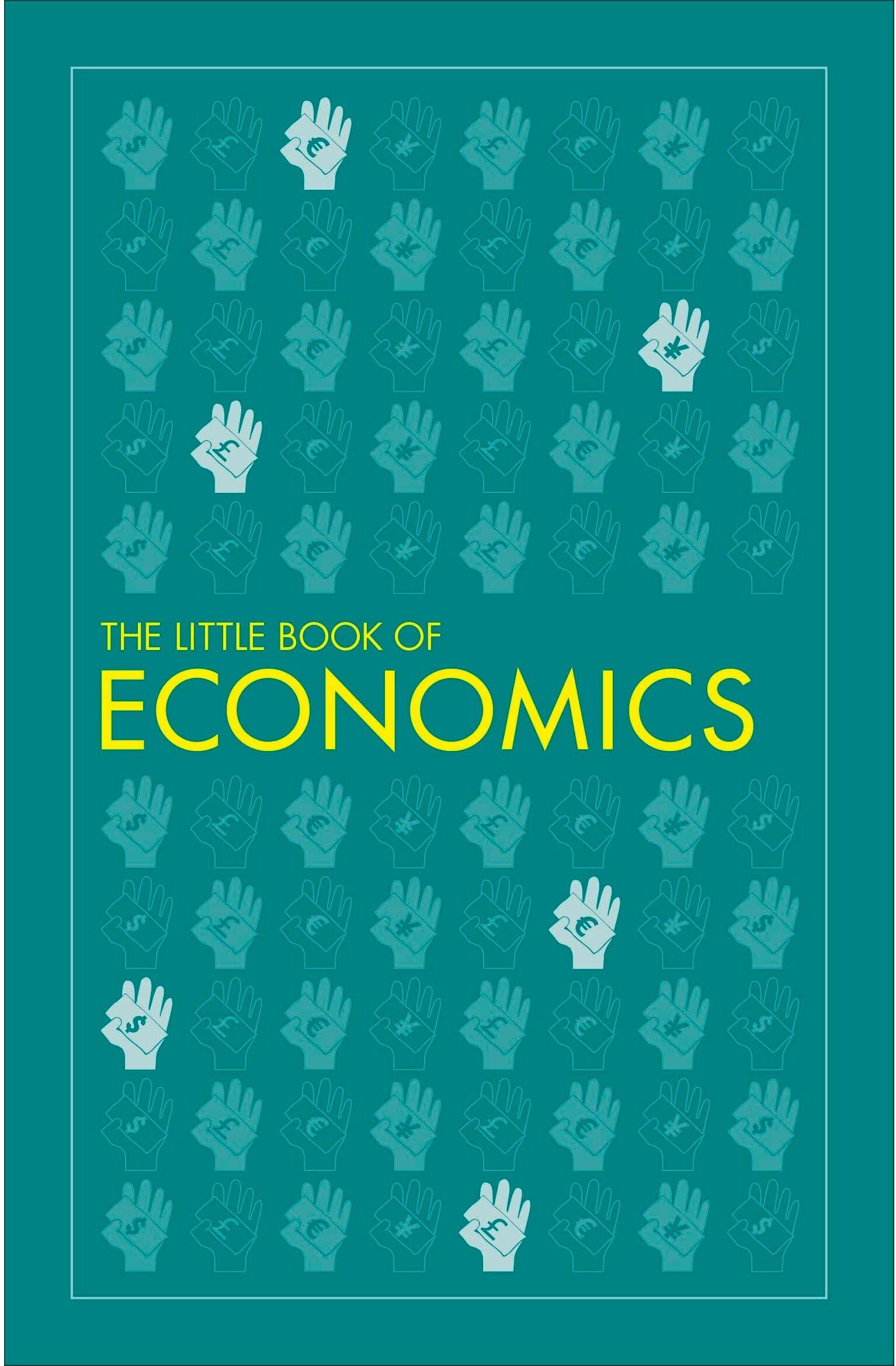
The Little Book of Economics (DK Big Ideas Series)This book is the perfect introduction to the subject of economics and economic ideas through history. From the earliest forms of currency to the Industrial Revolution, and from the birth of the stock market to free-market capitalism and globalized trade, The Little Book of Economics brings economic theory and the work of key economists to life. Journeying through centuries of economic thought, it is the perfect pocket-sized guide to the subject. Packed with infographics and flowcharts that explain complex concepts clearly and simply, The Little Book of Economics offers you a combination of clear text and hard-working infographics in a portable format that is perfect for reading on the go.5,99 £*Shipping: 2,99 £Secure redirect to the provider
-
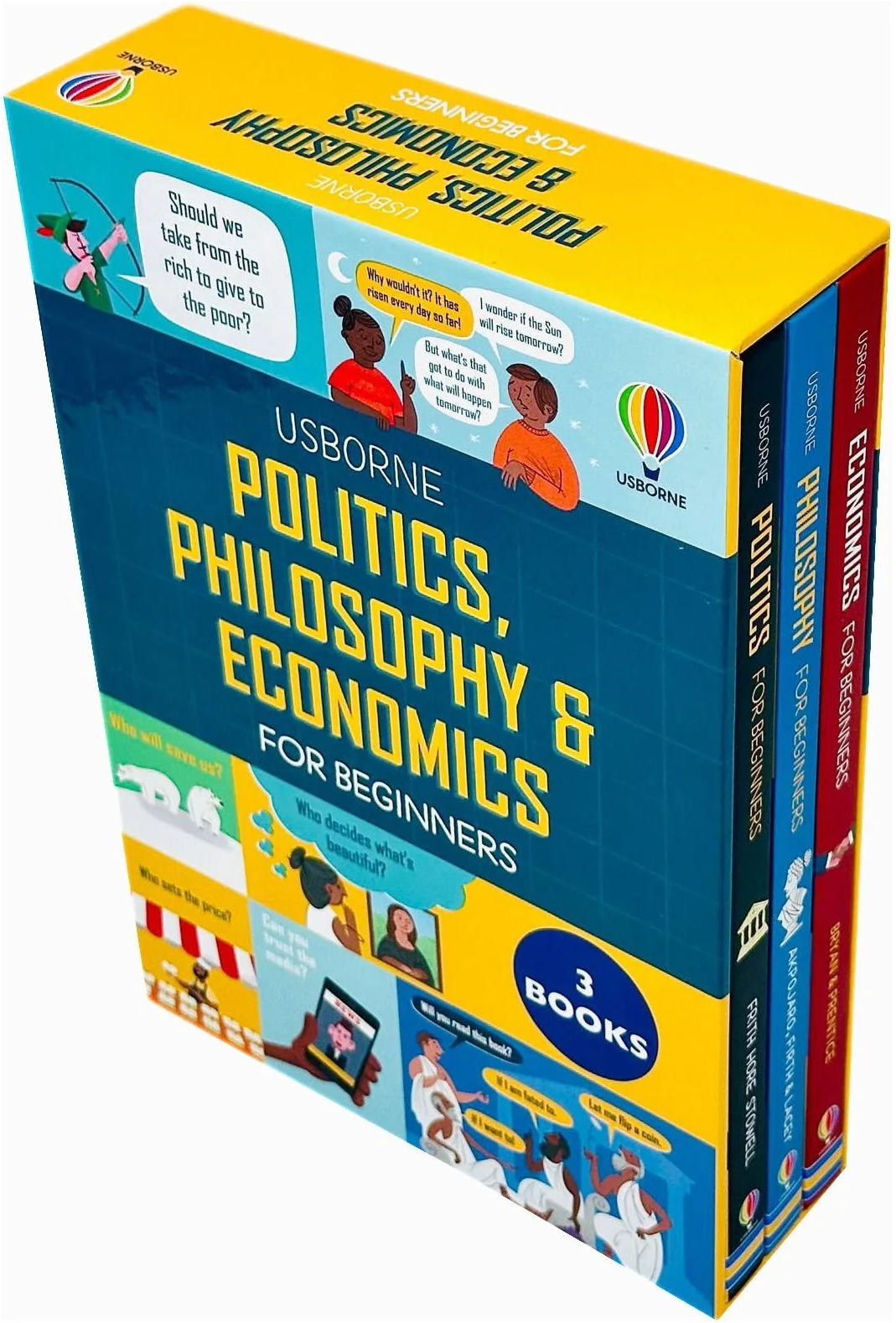
Usborne Big Subjects For Beginners 3 Books Box Set (Politics, Philosophy and Economics)Usborne Big Subjects For Beginners 3 Books Box Set (Politics, Philosophy and Economics) Economics for Beginners Nobody has everything they need, all the time - so how can we make do with what we have? Economics is all about understanding the choices we make to solve this problem. With bright, infographics pictures, this informative book describes why markets. Politics for Beginners With Brexit looming and constant political uncertainty in the UK, people are more confused by politics than ever before. Politics for Beginners answers the questions that people are afraid to ask, offering a no-nonsense guide to what politics is all about. Philosophy for Beginners Philosophy is a way of thinking about just about anything. It asks big questions, such as "how can I be good?" or "what makes something beautiful?" Using lively examples, humorous illustrations and simple thought experiments, this book opens up the world of philosophy to both children and adults and includes links to recommended. Related Tags: Usborne, Usbourne Books14,95 £*Shipping: 2,99 £Secure redirect to the provider


-
What is Yugoslavia called today?
Yugoslavia is no longer a country. It dissolved in the early 1990s due to ethnic conflicts and is now split into several independent countries. These countries include Serbia, Croatia, Slovenia, Bosnia and Herzegovina, Montenegro, Kosovo, and North Macedonia. **
-
How would Yugoslavia look like today?
It is difficult to predict exactly how Yugoslavia would look like today as there are many factors to consider. However, it is possible that the country would have faced challenges due to its diverse ethnic and religious makeup. There may have been ongoing tensions between different groups, potentially leading to political instability and conflict. On the other hand, if the country had managed to maintain unity and stability, it could have been a strong player in the region with a diverse and vibrant culture. **
-
Which language was spoken in Yugoslavia?
The main language spoken in Yugoslavia was Serbo-Croatian, which is a South Slavic language. This language was a combination of Serbian and Croatian dialects and was used as the official language of the country. Other languages spoken in Yugoslavia included Slovenian, Macedonian, and Albanian, reflecting the diverse ethnic makeup of the country. **
-
Why does Yugoslavia no longer exist?
Yugoslavia no longer exists due to a combination of factors, including ethnic and nationalist tensions, economic difficulties, and the collapse of communism. The country was made up of multiple ethnic groups, including Serbs, Croats, and Bosnians, which led to internal conflicts and eventually the breakup of the country. Additionally, the fall of communism in Eastern Europe and the economic struggles that followed contributed to the disintegration of Yugoslavia. Ultimately, these factors led to the secession of various republics and the eventual dissolution of the country. **
Is Yugoslavia a world power today?
No, Yugoslavia is not a world power today. In fact, Yugoslavia as a political entity ceased to exist in the 1990s, breaking up into several independent countries including Serbia, Croatia, Bosnia and Herzegovina, Montenegro, North Macedonia, and Slovenia. These individual countries do not hold the same level of global influence or power as the former Yugoslavia once did. Therefore, Yugoslavia is not a world power today. **
What is the problem regarding Yugoslavia?
The problem regarding Yugoslavia is the ongoing ethnic and political tensions that have persisted since the breakup of the country in the 1990s. The region has experienced violent conflicts and wars, resulting in the loss of thousands of lives and the displacement of millions of people. The unresolved issues of ethnic nationalism, territorial disputes, and political instability continue to hinder the progress and stability of the region. Additionally, the lack of reconciliation and accountability for war crimes and human rights abuses further complicates efforts to achieve lasting peace and stability in the former Yugoslav states. **
Top-Angebote
Products related to Yugoslavia:
-
Banbo Tielemans Belgium Fully Articulated FigurineThe Tielemans Fully Articulated Figurine is a premium collectible designed with precision and authenticity. Measuring 20cm in height, this miniature figure reflects the highest standards of craftsmanship, offering full articulation for dynamic posing. Each figurine is presented in an official Belgium kit and includes a club-branded football, reinforcing its status as an officially licensed product. This collectible is a tribute to Youri Tielemans's legacy and is an essential item for serious football memorabilia collectors. - 20cm premium collectible figure - Full articulation for dynamic posing - Officially licensed, official kit - Includes club-branded football - Great gift for collectors and fans20,49 £*Shipping: 0,00 £Secure redirect to the provider
-
Banbo Courtois Belgium Fully Articulated FigurineThe Courtois Fully Articulated Figurine is a premium collectible designed with precision and authenticity. Measuring 20cm in height, this miniature figure reflects the highest standards of craftsmanship, offering full articulation for dynamic posing. Each figurine is presented in an official Belgium kit and includes a club-branded football, reinforcing its status as an officially licensed product. This collectible is a tribute to Thibaut Courtois's legacy and is an essential item for serious football memorabilia collectors. - 20cm premium collectible figure - Full articulation for dynamic posing - Officially licensed, official kit - Includes club-branded football - Great gift for collectors and fans20,49 £*Shipping: 0,00 £Secure redirect to the provider
-
Banbo De Bruyne Belgium Fully Articulated FigurineStanding 20cm tall in his Belgium national team kit, this Banbo De Bruyne figurine captures one of football’s most complete midfielders in red, complete with articulation at the shoulders, hips, and neck for dynamic pose options. Whether displayed on a shelf or featured mid-celebration, every detail - from the authentic uniform to the realistic facial sculpting - reflects the precision expected from officially licensed sports merchandise. Football collectors and Belgium supporters will find this figurine equally suited to display and imaginative play. Each comes with an official team-branded football accessory, making it a self-contained collectors’ piece that pairs well with other players in the Banbo range, sold separately. • Multi-Point Articulation: Fully posable at the shoulders, hips, and neck for celebration poses and dynamic display angles. • Authentic Team Kit: Sculpted in Belgium’s official national team uniform with precise sponsor and kit detailing. • Included Football Accessory: Comes with an official Belgium team-branded football to complete the collectors’ display. • Realistic Facial Likeness: Hand-sculpted and painted to capture De Bruyne’s distinctive features with impressive accuracy. • Officially Licensed: An authorised merchandise product with full international licensing compliance. • Collector-Friendly Scale: At 20cm tall, sized perfectly for display on shelves, desks, or in fan collections alongside other figurines.20,49 £*Shipping: 0,00 £Secure redirect to the provider
-
Banbo Sockers Jeremy Doku Belgium 20cm Fully Articulated FigurineThe Doku Fully Articulated Figurine is a premium collectible designed with precision and authenticity. Measuring 20cm in height, this miniature figure reflects the highest standards of craftsmanship, offering full articulation for dynamic posing. Each figurine is presented in an official Belgium kit and includes a club-branded football, reinforcing its status as an officially licensed product. This collectible is a tribute to Jeremy Doku's legacy and is an essential item for serious football memorabilia collectors. - 20cm premium collectible figure - Full articulation for dynamic posing - Officially licensed, official kit - Includes club-branded football - Great gift for collectors and fans20,49 £*Shipping: 0,00 £Secure redirect to the provider
-
Was Yugoslavia a democracy?
Yugoslavia was officially a socialist federal republic, and its political system was based on the principles of self-management and workers' councils. While it had elements of a multi-party system and periodic elections, the Communist Party held a dominant position in the government and society. This limited the true democratic nature of the country, as the ruling party had significant control over political and social life. Therefore, while Yugoslavia had some democratic features, it did not fully function as a liberal democracy. **
-
What happened to Yugoslavia?
Yugoslavia was a country in Southeast Europe that existed from 1918 to 2003. It was formed after World War I and consisted of several different ethnic groups, including Serbs, Croats, and Bosniaks. However, ethnic tensions and political conflicts eventually led to the breakup of Yugoslavia in the 1990s. This breakup resulted in a series of violent conflicts, including the Bosnian War and the Kosovo War. By 2003, the remaining parts of Yugoslavia had all become independent nations, including Serbia, Croatia, Bosnia and Herzegovina, Montenegro, North Macedonia, and Slovenia. **
-
What is Yugoslavia called today?
Yugoslavia is no longer a country. It dissolved in the early 1990s due to ethnic conflicts and is now split into several independent countries. These countries include Serbia, Croatia, Slovenia, Bosnia and Herzegovina, Montenegro, Kosovo, and North Macedonia. **
-
How would Yugoslavia look like today?
It is difficult to predict exactly how Yugoslavia would look like today as there are many factors to consider. However, it is possible that the country would have faced challenges due to its diverse ethnic and religious makeup. There may have been ongoing tensions between different groups, potentially leading to political instability and conflict. On the other hand, if the country had managed to maintain unity and stability, it could have been a strong player in the region with a diverse and vibrant culture. **
Similar search terms for Yugoslavia
-
The Little Book of Economics (DK Big Ideas Series)This book is the perfect introduction to the subject of economics and economic ideas through history. From the earliest forms of currency to the Industrial Revolution, and from the birth of the stock market to free-market capitalism and globalized trade, The Little Book of Economics brings economic theory and the work of key economists to life. Journeying through centuries of economic thought, it is the perfect pocket-sized guide to the subject. Packed with infographics and flowcharts that explain complex concepts clearly and simply, The Little Book of Economics offers you a combination of clear text and hard-working infographics in a portable format that is perfect for reading on the go.5,99 £*Shipping: 2,99 £Secure redirect to the provider
-
Usborne Big Subjects For Beginners 3 Books Box Set (Politics, Philosophy and Economics)Usborne Big Subjects For Beginners 3 Books Box Set (Politics, Philosophy and Economics) Economics for Beginners Nobody has everything they need, all the time - so how can we make do with what we have? Economics is all about understanding the choices we make to solve this problem. With bright, infographics pictures, this informative book describes why markets. Politics for Beginners With Brexit looming and constant political uncertainty in the UK, people are more confused by politics than ever before. Politics for Beginners answers the questions that people are afraid to ask, offering a no-nonsense guide to what politics is all about. Philosophy for Beginners Philosophy is a way of thinking about just about anything. It asks big questions, such as "how can I be good?" or "what makes something beautiful?" Using lively examples, humorous illustrations and simple thought experiments, this book opens up the world of philosophy to both children and adults and includes links to recommended. Related Tags: Usborne, Usbourne Books14,95 £*Shipping: 2,99 £Secure redirect to the provider
-
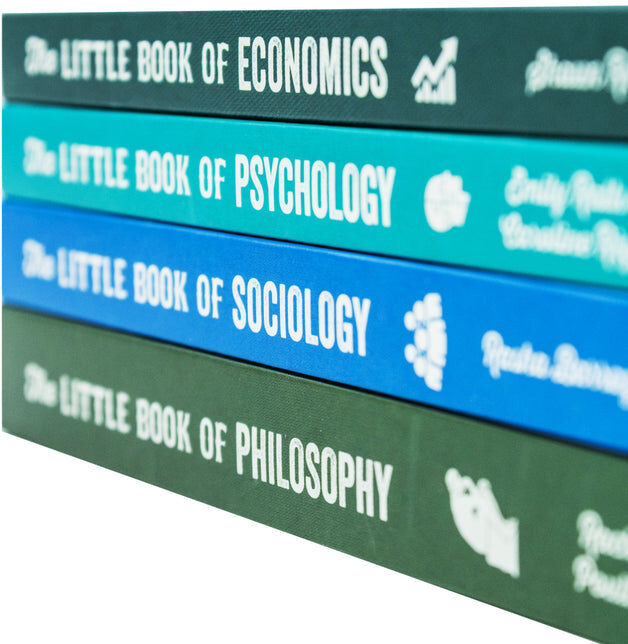
Summersdale Publishers The Little Book of Philosophy, Sociology, Economics & Psychology 4 Books Collection SetThe Little Book of Philosophy Philosophy is a quest for wisdom and knowledge; philosophia in Ancient Greek literally means “love of wisdom”. The aim of philosophy is to ask and explore life’s big questions to help us work out what we can know and how we can live a good life. Today, in a world of fake news, embarking on a quest for truth couldn’t be more important. The Little Book of Sociology From the smallest everyday interaction to the impact of vast systemic change, societies are brimming with fascinating phenomena we all want to understand more clearly.There's never been a more important moment to grasp what's going on around us, and this pocket-sized guide offers an engaging introduction to the key sociological concepts. The Little Book of Economics This Book will bring you up to speed on the basics of micro- and macroeconomics and demystify the world of taxes, trade, investments and finance, in simple English and with easy-to-follow examples.By the end of this crash course, you will have a grasp on all the essential terms, concepts and theories you need to know to understand modern-day. The Little Book of Psychology If you want to know your Freud from your Jung and your Milgram from your Maslow, strap in for this whirlwind tour of the highlights of psychology. Including accessible primers on: - The early thinkers who contributed to psychological ideas and the birth of modern psychology- Famous (and often controversial) experiments and their repercussions.12,99 £*Shipping: 2,99 £Secure redirect to the provider
-
Which language was spoken in Yugoslavia?
The main language spoken in Yugoslavia was Serbo-Croatian, which is a South Slavic language. This language was a combination of Serbian and Croatian dialects and was used as the official language of the country. Other languages spoken in Yugoslavia included Slovenian, Macedonian, and Albanian, reflecting the diverse ethnic makeup of the country. **
-
Why does Yugoslavia no longer exist?
Yugoslavia no longer exists due to a combination of factors, including ethnic and nationalist tensions, economic difficulties, and the collapse of communism. The country was made up of multiple ethnic groups, including Serbs, Croats, and Bosnians, which led to internal conflicts and eventually the breakup of the country. Additionally, the fall of communism in Eastern Europe and the economic struggles that followed contributed to the disintegration of Yugoslavia. Ultimately, these factors led to the secession of various republics and the eventual dissolution of the country. **
-
Is Yugoslavia a world power today?
No, Yugoslavia is not a world power today. In fact, Yugoslavia as a political entity ceased to exist in the 1990s, breaking up into several independent countries including Serbia, Croatia, Bosnia and Herzegovina, Montenegro, North Macedonia, and Slovenia. These individual countries do not hold the same level of global influence or power as the former Yugoslavia once did. Therefore, Yugoslavia is not a world power today. **
-
What is the problem regarding Yugoslavia?
The problem regarding Yugoslavia is the ongoing ethnic and political tensions that have persisted since the breakup of the country in the 1990s. The region has experienced violent conflicts and wars, resulting in the loss of thousands of lives and the displacement of millions of people. The unresolved issues of ethnic nationalism, territorial disputes, and political instability continue to hinder the progress and stability of the region. Additionally, the lack of reconciliation and accountability for war crimes and human rights abuses further complicates efforts to achieve lasting peace and stability in the former Yugoslav states. **
* All prices are inclusive of VAT and, if applicable, plus shipping costs. The offer information is based on the details provided by the respective shop and is updated through automated processes. Real-time updates do not occur, so deviations can occur in individual cases. ** Note: Parts of this content were created by AI.