Buy jean-lucdehaene.eu ?
We are moving the project
jean-lucdehaene.eu .
Are you interested in purchasing the domain
jean-lucdehaene.eu ?
domain@kv-gmbh.de · 0541-91531010
Buy jean-lucdehaene.eu ?
What are similarity ratios?
Similarity ratios are ratios that compare the corresponding sides of two similar figures. They help us understand the relationship between the sides of similar shapes. The ratio of corresponding sides in similar figures is always the same, which means that if you know the ratio of one pair of sides, you can use it to find the ratio of other pairs of sides. Similarity ratios are important in geometry and are used to solve problems involving similar figures. **
What is the difference between similarity theorem 1 and similarity theorem 2?
Similarity theorem 1, also known as the Angle-Angle (AA) similarity theorem, states that if two angles of one triangle are congruent to two angles of another triangle, then the triangles are similar. On the other hand, similarity theorem 2, also known as the Side-Angle-Side (SAS) similarity theorem, states that if two sides of one triangle are proportional to two sides of another triangle and the included angles are congruent, then the triangles are similar. The main difference between the two theorems is the criteria for establishing similarity - AA theorem focuses on angle congruence, while SAS theorem focuses on both side proportionality and angle congruence. **


Similar search terms for Similarity
Top-Angebote
Products related to Similarity:
-
Banbo De Bruyne Belgium Fully Articulated FigurineStanding 20cm tall in his Belgium national team kit, this Banbo De Bruyne figurine captures one of football’s most complete midfielders in red, complete with articulation at the shoulders, hips, and neck for dynamic pose options. Whether displayed on a shelf or featured mid-celebration, every detail - from the authentic uniform to the realistic facial sculpting - reflects the precision expected from officially licensed sports merchandise. Football collectors and Belgium supporters will find this figurine equally suited to display and imaginative play. Each comes with an official team-branded football accessory, making it a self-contained collectors’ piece that pairs well with other players in the Banbo range, sold separately. • Multi-Point Articulation: Fully posable at the shoulders, hips, and neck for celebration poses and dynamic display angles. • Authentic Team Kit: Sculpted in Belgium’s official national team uniform with precise sponsor and kit detailing. • Included Football Accessory: Comes with an official Belgium team-branded football to complete the collectors’ display. • Realistic Facial Likeness: Hand-sculpted and painted to capture De Bruyne’s distinctive features with impressive accuracy. • Officially Licensed: An authorised merchandise product with full international licensing compliance. • Collector-Friendly Scale: At 20cm tall, sized perfectly for display on shelves, desks, or in fan collections alongside other figurines.20,49 £*Shipping: 0,00 £Secure redirect to the provider
-
Banbo Sockers Jeremy Doku Belgium 20cm Fully Articulated FigurineThe Doku Fully Articulated Figurine is a premium collectible designed with precision and authenticity. Measuring 20cm in height, this miniature figure reflects the highest standards of craftsmanship, offering full articulation for dynamic posing. Each figurine is presented in an official Belgium kit and includes a club-branded football, reinforcing its status as an officially licensed product. This collectible is a tribute to Jeremy Doku's legacy and is an essential item for serious football memorabilia collectors. - 20cm premium collectible figure - Full articulation for dynamic posing - Officially licensed, official kit - Includes club-branded football - Great gift for collectors and fans20,49 £*Shipping: 0,00 £Secure redirect to the provider
-
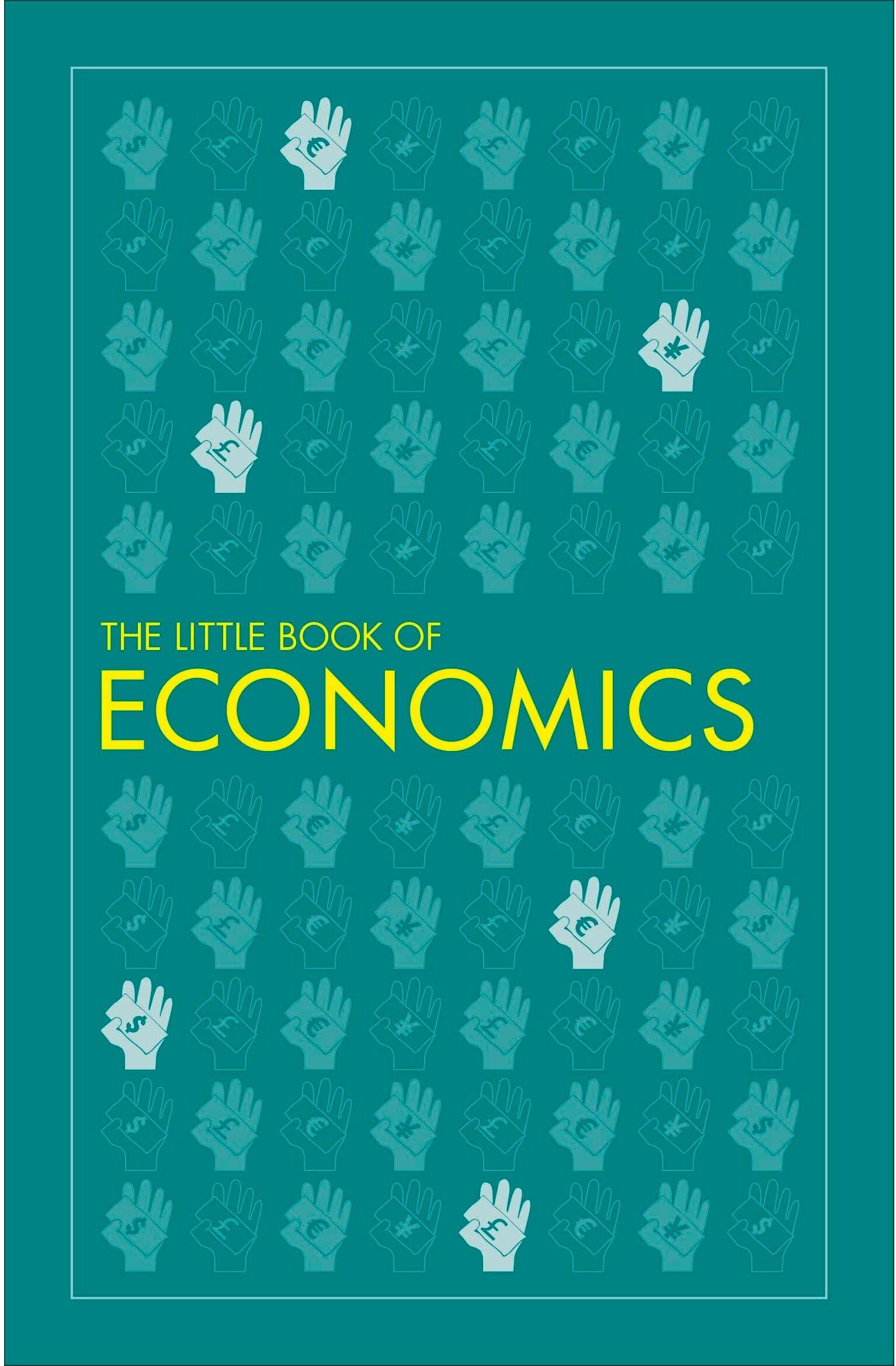
The Little Book of Economics (DK Big Ideas Series)This book is the perfect introduction to the subject of economics and economic ideas through history. From the earliest forms of currency to the Industrial Revolution, and from the birth of the stock market to free-market capitalism and globalized trade, The Little Book of Economics brings economic theory and the work of key economists to life. Journeying through centuries of economic thought, it is the perfect pocket-sized guide to the subject. Packed with infographics and flowcharts that explain complex concepts clearly and simply, The Little Book of Economics offers you a combination of clear text and hard-working infographics in a portable format that is perfect for reading on the go.5,99 £*Shipping: 2,99 £Secure redirect to the provider
-
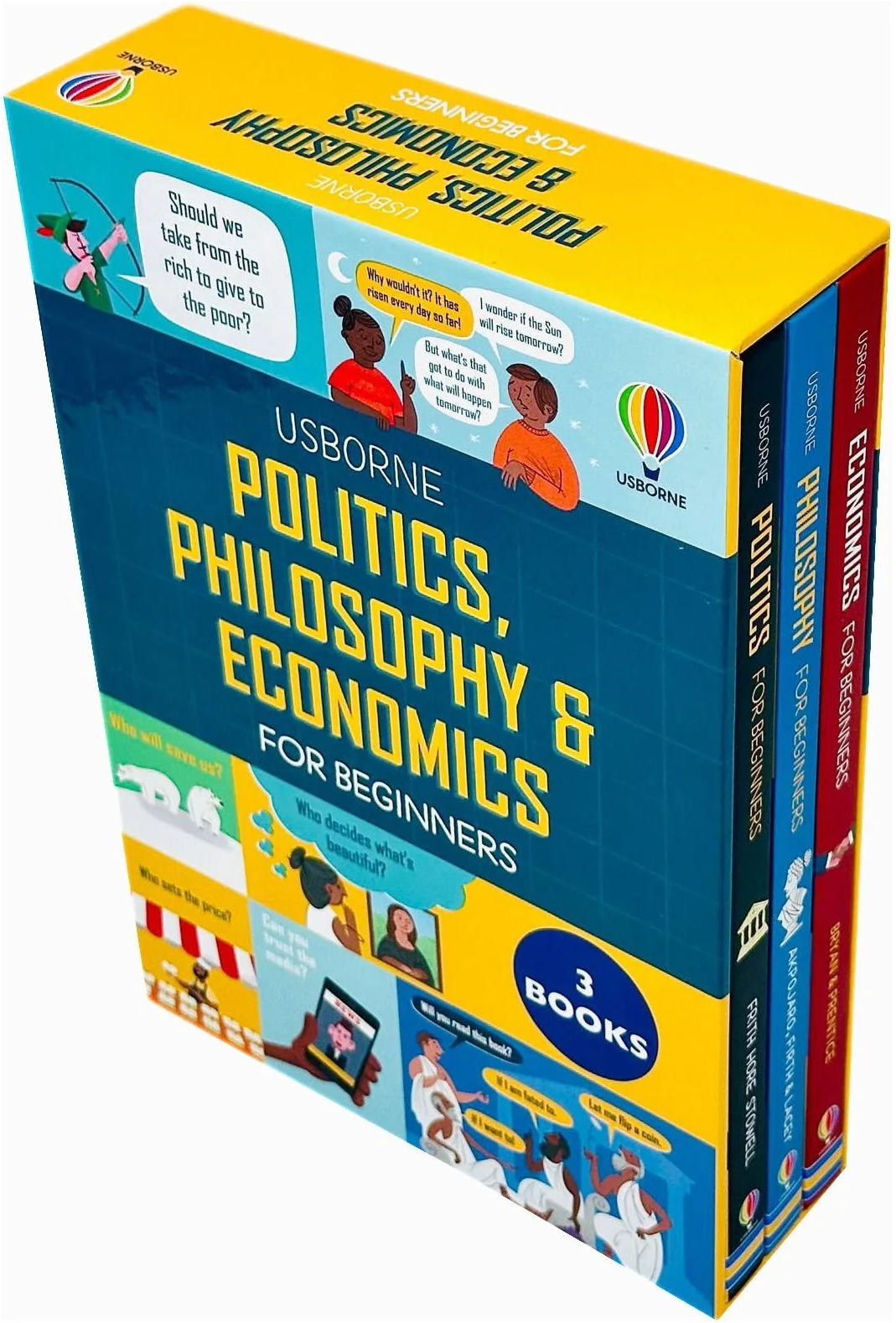
Usborne Big Subjects For Beginners 3 Books Box Set (Politics, Philosophy and Economics)Usborne Big Subjects For Beginners 3 Books Box Set (Politics, Philosophy and Economics) Economics for Beginners Nobody has everything they need, all the time - so how can we make do with what we have? Economics is all about understanding the choices we make to solve this problem. With bright, infographics pictures, this informative book describes why markets. Politics for Beginners With Brexit looming and constant political uncertainty in the UK, people are more confused by politics than ever before. Politics for Beginners answers the questions that people are afraid to ask, offering a no-nonsense guide to what politics is all about. Philosophy for Beginners Philosophy is a way of thinking about just about anything. It asks big questions, such as "how can I be good?" or "what makes something beautiful?" Using lively examples, humorous illustrations and simple thought experiments, this book opens up the world of philosophy to both children and adults and includes links to recommended. Related Tags: Usborne, Usbourne Books14,95 £*Shipping: 2,99 £Secure redirect to the provider


-
How can the similarity factor for determining the similarity of triangles be calculated?
The similarity factor for determining the similarity of triangles can be calculated by comparing the corresponding sides of the two triangles. If the ratio of the lengths of the corresponding sides of the two triangles is the same, then the triangles are similar. This ratio can be calculated by dividing the length of one side of a triangle by the length of the corresponding side of the other triangle. If all three ratios of corresponding sides are equal, then the triangles are similar. This is known as the similarity factor and is used to determine the similarity of triangles. **
-
How can one calculate the similarity factor to determine the similarity of triangles?
The similarity factor can be calculated by comparing the corresponding sides of two triangles. To do this, one can divide the length of one side of the first triangle by the length of the corresponding side of the second triangle. This process is repeated for all three pairs of corresponding sides. If the ratios of the corresponding sides are equal, then the triangles are similar, and the similarity factor will be 1. If the ratios are not equal, the similarity factor will be the ratio of the two triangles' areas. **
-
What is similarity in mathematics?
In mathematics, similarity refers to the relationship between two objects or shapes that have the same shape but are not necessarily the same size. This means that the objects are proportional to each other, with corresponding angles being equal and corresponding sides being in the same ratio. Similarity is often used in geometry to compare and analyze shapes, allowing for the transfer of properties and measurements from one shape to another. **
-
What is the similarity ratio?
The similarity ratio is a comparison of the corresponding sides of two similar figures. It is used to determine how the dimensions of one figure compare to the dimensions of another figure when they are similar. The ratio is calculated by dividing the length of a side of one figure by the length of the corresponding side of the other figure. This ratio remains constant for all pairs of corresponding sides in similar figures. **
Is there a similarity here?
Yes, there is a similarity here. Both situations involve individuals or groups facing challenges and obstacles, and needing to find creative solutions to overcome them. In both cases, there is a need for resilience, determination, and adaptability in order to succeed. Additionally, both situations highlight the importance of teamwork and collaboration in achieving a common goal. **
Is mirroring allowed in similarity?
Yes, mirroring is allowed in similarity. Mirroring is a technique used to create similarity by reflecting the actions, behaviors, or emotions of another person. It can help to establish rapport and build connections with others by showing that you understand and relate to their experiences. However, it is important to use mirroring in a genuine and respectful way, and to be mindful of the other person's comfort level and boundaries. **
Top-Angebote
Products related to Similarity:
-
Banbo Tielemans Belgium Fully Articulated FigurineThe Tielemans Fully Articulated Figurine is a premium collectible designed with precision and authenticity. Measuring 20cm in height, this miniature figure reflects the highest standards of craftsmanship, offering full articulation for dynamic posing. Each figurine is presented in an official Belgium kit and includes a club-branded football, reinforcing its status as an officially licensed product. This collectible is a tribute to Youri Tielemans's legacy and is an essential item for serious football memorabilia collectors. - 20cm premium collectible figure - Full articulation for dynamic posing - Officially licensed, official kit - Includes club-branded football - Great gift for collectors and fans20,49 £*Shipping: 0,00 £Secure redirect to the provider
-
Banbo Courtois Belgium Fully Articulated FigurineThe Courtois Fully Articulated Figurine is a premium collectible designed with precision and authenticity. Measuring 20cm in height, this miniature figure reflects the highest standards of craftsmanship, offering full articulation for dynamic posing. Each figurine is presented in an official Belgium kit and includes a club-branded football, reinforcing its status as an officially licensed product. This collectible is a tribute to Thibaut Courtois's legacy and is an essential item for serious football memorabilia collectors. - 20cm premium collectible figure - Full articulation for dynamic posing - Officially licensed, official kit - Includes club-branded football - Great gift for collectors and fans20,49 £*Shipping: 0,00 £Secure redirect to the provider
-
Banbo De Bruyne Belgium Fully Articulated FigurineStanding 20cm tall in his Belgium national team kit, this Banbo De Bruyne figurine captures one of football’s most complete midfielders in red, complete with articulation at the shoulders, hips, and neck for dynamic pose options. Whether displayed on a shelf or featured mid-celebration, every detail - from the authentic uniform to the realistic facial sculpting - reflects the precision expected from officially licensed sports merchandise. Football collectors and Belgium supporters will find this figurine equally suited to display and imaginative play. Each comes with an official team-branded football accessory, making it a self-contained collectors’ piece that pairs well with other players in the Banbo range, sold separately. • Multi-Point Articulation: Fully posable at the shoulders, hips, and neck for celebration poses and dynamic display angles. • Authentic Team Kit: Sculpted in Belgium’s official national team uniform with precise sponsor and kit detailing. • Included Football Accessory: Comes with an official Belgium team-branded football to complete the collectors’ display. • Realistic Facial Likeness: Hand-sculpted and painted to capture De Bruyne’s distinctive features with impressive accuracy. • Officially Licensed: An authorised merchandise product with full international licensing compliance. • Collector-Friendly Scale: At 20cm tall, sized perfectly for display on shelves, desks, or in fan collections alongside other figurines.20,49 £*Shipping: 0,00 £Secure redirect to the provider
-
Banbo Sockers Jeremy Doku Belgium 20cm Fully Articulated FigurineThe Doku Fully Articulated Figurine is a premium collectible designed with precision and authenticity. Measuring 20cm in height, this miniature figure reflects the highest standards of craftsmanship, offering full articulation for dynamic posing. Each figurine is presented in an official Belgium kit and includes a club-branded football, reinforcing its status as an officially licensed product. This collectible is a tribute to Jeremy Doku's legacy and is an essential item for serious football memorabilia collectors. - 20cm premium collectible figure - Full articulation for dynamic posing - Officially licensed, official kit - Includes club-branded football - Great gift for collectors and fans20,49 £*Shipping: 0,00 £Secure redirect to the provider
-
What are similarity ratios?
Similarity ratios are ratios that compare the corresponding sides of two similar figures. They help us understand the relationship between the sides of similar shapes. The ratio of corresponding sides in similar figures is always the same, which means that if you know the ratio of one pair of sides, you can use it to find the ratio of other pairs of sides. Similarity ratios are important in geometry and are used to solve problems involving similar figures. **
-
What is the difference between similarity theorem 1 and similarity theorem 2?
Similarity theorem 1, also known as the Angle-Angle (AA) similarity theorem, states that if two angles of one triangle are congruent to two angles of another triangle, then the triangles are similar. On the other hand, similarity theorem 2, also known as the Side-Angle-Side (SAS) similarity theorem, states that if two sides of one triangle are proportional to two sides of another triangle and the included angles are congruent, then the triangles are similar. The main difference between the two theorems is the criteria for establishing similarity - AA theorem focuses on angle congruence, while SAS theorem focuses on both side proportionality and angle congruence. **
-
How can the similarity factor for determining the similarity of triangles be calculated?
The similarity factor for determining the similarity of triangles can be calculated by comparing the corresponding sides of the two triangles. If the ratio of the lengths of the corresponding sides of the two triangles is the same, then the triangles are similar. This ratio can be calculated by dividing the length of one side of a triangle by the length of the corresponding side of the other triangle. If all three ratios of corresponding sides are equal, then the triangles are similar. This is known as the similarity factor and is used to determine the similarity of triangles. **
-
How can one calculate the similarity factor to determine the similarity of triangles?
The similarity factor can be calculated by comparing the corresponding sides of two triangles. To do this, one can divide the length of one side of the first triangle by the length of the corresponding side of the second triangle. This process is repeated for all three pairs of corresponding sides. If the ratios of the corresponding sides are equal, then the triangles are similar, and the similarity factor will be 1. If the ratios are not equal, the similarity factor will be the ratio of the two triangles' areas. **
Similar search terms for Similarity
-
The Little Book of Economics (DK Big Ideas Series)This book is the perfect introduction to the subject of economics and economic ideas through history. From the earliest forms of currency to the Industrial Revolution, and from the birth of the stock market to free-market capitalism and globalized trade, The Little Book of Economics brings economic theory and the work of key economists to life. Journeying through centuries of economic thought, it is the perfect pocket-sized guide to the subject. Packed with infographics and flowcharts that explain complex concepts clearly and simply, The Little Book of Economics offers you a combination of clear text and hard-working infographics in a portable format that is perfect for reading on the go.5,99 £*Shipping: 2,99 £Secure redirect to the provider
-
Usborne Big Subjects For Beginners 3 Books Box Set (Politics, Philosophy and Economics)Usborne Big Subjects For Beginners 3 Books Box Set (Politics, Philosophy and Economics) Economics for Beginners Nobody has everything they need, all the time - so how can we make do with what we have? Economics is all about understanding the choices we make to solve this problem. With bright, infographics pictures, this informative book describes why markets. Politics for Beginners With Brexit looming and constant political uncertainty in the UK, people are more confused by politics than ever before. Politics for Beginners answers the questions that people are afraid to ask, offering a no-nonsense guide to what politics is all about. Philosophy for Beginners Philosophy is a way of thinking about just about anything. It asks big questions, such as "how can I be good?" or "what makes something beautiful?" Using lively examples, humorous illustrations and simple thought experiments, this book opens up the world of philosophy to both children and adults and includes links to recommended. Related Tags: Usborne, Usbourne Books14,95 £*Shipping: 2,99 £Secure redirect to the provider
-
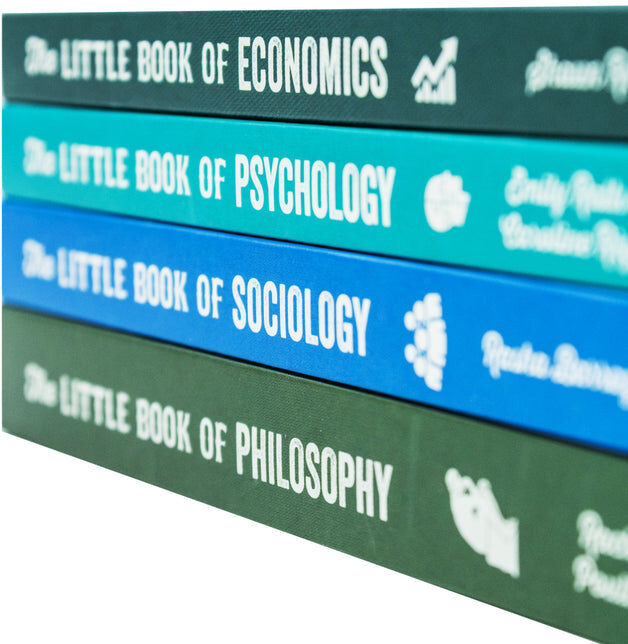
Summersdale Publishers The Little Book of Philosophy, Sociology, Economics & Psychology 4 Books Collection SetThe Little Book of Philosophy Philosophy is a quest for wisdom and knowledge; philosophia in Ancient Greek literally means “love of wisdom”. The aim of philosophy is to ask and explore life’s big questions to help us work out what we can know and how we can live a good life. Today, in a world of fake news, embarking on a quest for truth couldn’t be more important. The Little Book of Sociology From the smallest everyday interaction to the impact of vast systemic change, societies are brimming with fascinating phenomena we all want to understand more clearly.There's never been a more important moment to grasp what's going on around us, and this pocket-sized guide offers an engaging introduction to the key sociological concepts. The Little Book of Economics This Book will bring you up to speed on the basics of micro- and macroeconomics and demystify the world of taxes, trade, investments and finance, in simple English and with easy-to-follow examples.By the end of this crash course, you will have a grasp on all the essential terms, concepts and theories you need to know to understand modern-day. The Little Book of Psychology If you want to know your Freud from your Jung and your Milgram from your Maslow, strap in for this whirlwind tour of the highlights of psychology. Including accessible primers on: - The early thinkers who contributed to psychological ideas and the birth of modern psychology- Famous (and often controversial) experiments and their repercussions.12,99 £*Shipping: 2,99 £Secure redirect to the provider
-
What is similarity in mathematics?
In mathematics, similarity refers to the relationship between two objects or shapes that have the same shape but are not necessarily the same size. This means that the objects are proportional to each other, with corresponding angles being equal and corresponding sides being in the same ratio. Similarity is often used in geometry to compare and analyze shapes, allowing for the transfer of properties and measurements from one shape to another. **
-
What is the similarity ratio?
The similarity ratio is a comparison of the corresponding sides of two similar figures. It is used to determine how the dimensions of one figure compare to the dimensions of another figure when they are similar. The ratio is calculated by dividing the length of a side of one figure by the length of the corresponding side of the other figure. This ratio remains constant for all pairs of corresponding sides in similar figures. **
-
Is there a similarity here?
Yes, there is a similarity here. Both situations involve individuals or groups facing challenges and obstacles, and needing to find creative solutions to overcome them. In both cases, there is a need for resilience, determination, and adaptability in order to succeed. Additionally, both situations highlight the importance of teamwork and collaboration in achieving a common goal. **
-
Is mirroring allowed in similarity?
Yes, mirroring is allowed in similarity. Mirroring is a technique used to create similarity by reflecting the actions, behaviors, or emotions of another person. It can help to establish rapport and build connections with others by showing that you understand and relate to their experiences. However, it is important to use mirroring in a genuine and respectful way, and to be mindful of the other person's comfort level and boundaries. **
* All prices are inclusive of VAT and, if applicable, plus shipping costs. The offer information is based on the details provided by the respective shop and is updated through automated processes. Real-time updates do not occur, so deviations can occur in individual cases. ** Note: Parts of this content were created by AI.