Buy jean-lucdehaene.eu ?
We are moving the project
jean-lucdehaene.eu .
Are you interested in purchasing the domain
jean-lucdehaene.eu ?
domain@kv-gmbh.de · 0541-91531010
Buy jean-lucdehaene.eu ?
What are the proofs for destiny and what are the proofs for randomness?
The proofs for destiny often come from religious or spiritual beliefs, which suggest that there is a predetermined path or plan for each individual. Some people also point to experiences or events in their lives that seem to be too coincidental to be random, leading them to believe in destiny. On the other hand, the proofs for randomness often come from scientific and statistical evidence. Randomness can be observed in natural phenomena, such as the unpredictable behavior of particles at the quantum level. Additionally, statistical analysis of events and outcomes can show patterns that are consistent with randomness rather than a predetermined plan. **
What are proofs by induction?
Proofs by induction are a mathematical technique used to prove that a statement holds for all natural numbers. The proof typically involves two steps: the base case, where the statement is shown to be true for the smallest natural number, and the inductive step, where it is shown that if the statement holds for a particular natural number, then it also holds for the next natural number. This process allows us to conclude that the statement holds for all natural numbers. Proofs by induction are commonly used in various areas of mathematics, such as algebra, calculus, and number theory. **
Similar search terms for Proofs
Top-Angebote
Products related to Proofs:
-
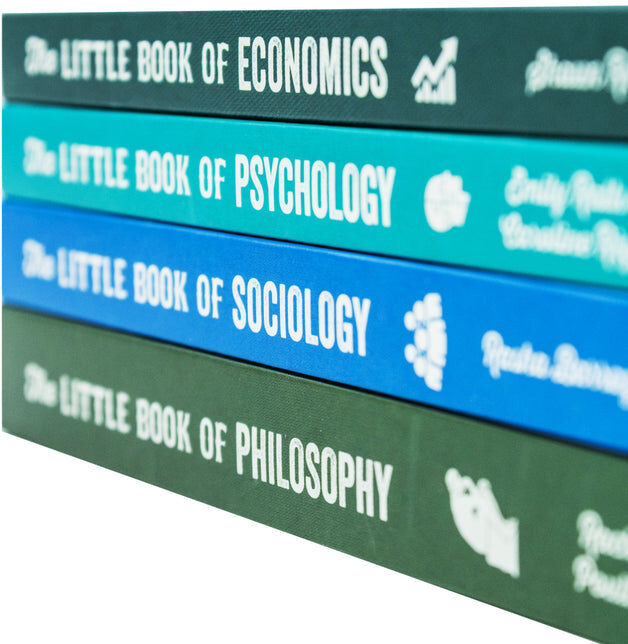
Summersdale Publishers The Little Book of Philosophy, Sociology, Economics & Psychology 4 Books Collection SetThe Little Book of Philosophy Philosophy is a quest for wisdom and knowledge; philosophia in Ancient Greek literally means “love of wisdom”. The aim of philosophy is to ask and explore life’s big questions to help us work out what we can know and how we can live a good life. Today, in a world of fake news, embarking on a quest for truth couldn’t be more important. The Little Book of Sociology From the smallest everyday interaction to the impact of vast systemic change, societies are brimming with fascinating phenomena we all want to understand more clearly.There's never been a more important moment to grasp what's going on around us, and this pocket-sized guide offers an engaging introduction to the key sociological concepts. The Little Book of Economics This Book will bring you up to speed on the basics of micro- and macroeconomics and demystify the world of taxes, trade, investments and finance, in simple English and with easy-to-follow examples.By the end of this crash course, you will have a grasp on all the essential terms, concepts and theories you need to know to understand modern-day. The Little Book of Psychology If you want to know your Freud from your Jung and your Milgram from your Maslow, strap in for this whirlwind tour of the highlights of psychology. Including accessible primers on: - The early thinkers who contributed to psychological ideas and the birth of modern psychology- Famous (and often controversial) experiments and their repercussions.12,99 £*Shipping: 2,99 £Secure redirect to the provider
-
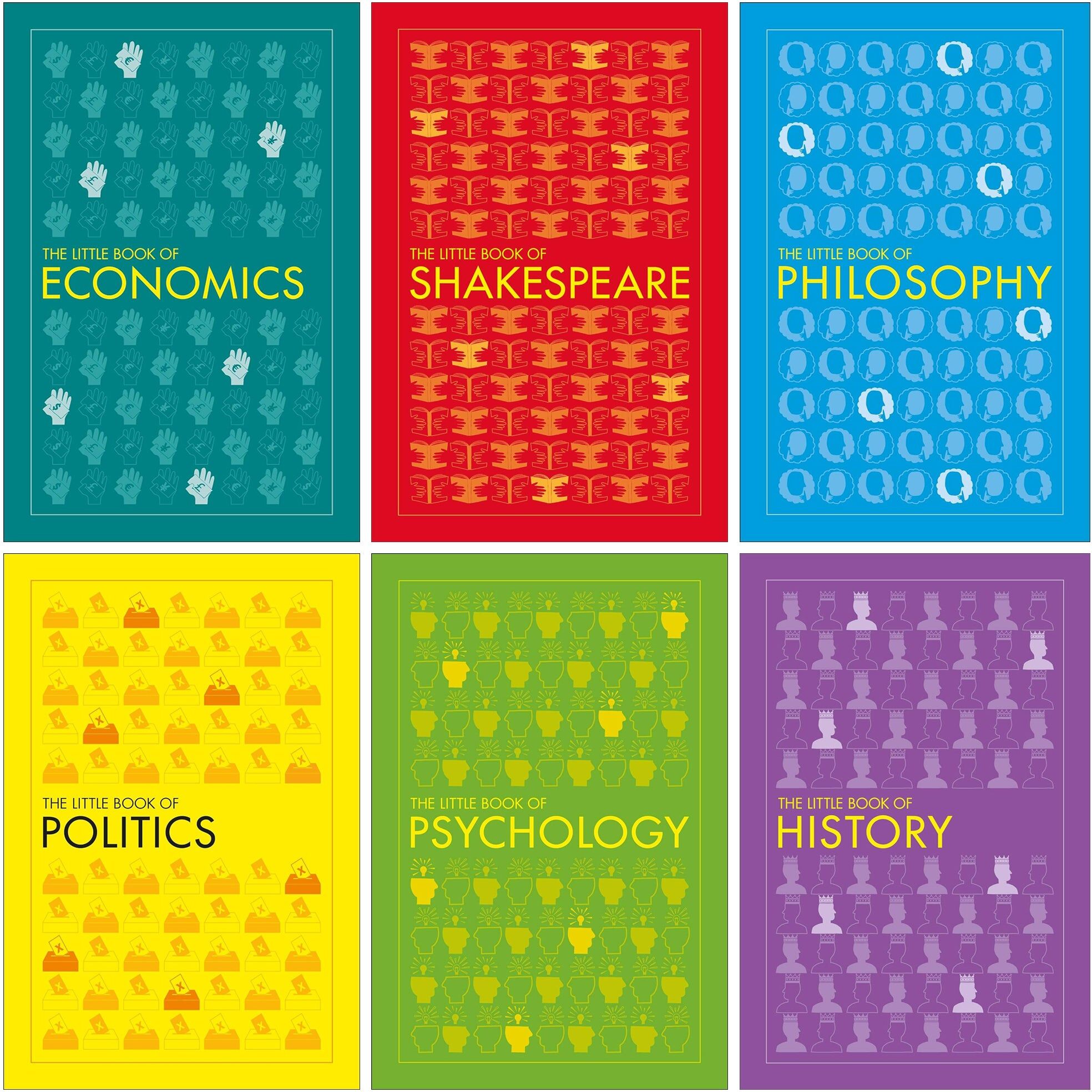
DK The Little Book Of Series 6 Books Collection Set (Economics, Politics, Shakespeare, Philosophy, Psychology, History)The Little Book Of Economics From the earliest forms of currency to the Industrial Revolution, and from the birth of the stock market to free-market capitalism and globalized trade, The Little Book of Economics brings economic theory and the work of key economists to life. Journeying through centuries of economic thought, it is the perfect pocket-sized guide to the subject. The Little Book Of Politics From the origins of democracy to Machiavelli's cunning statecraft, and from Rousseau's "social contract" to the American Declaration of Independence, Marxist communism, the dawn of populism, and identity politics, The Little Book of Politics examines the philosophies behind the different political beliefs and methods of government used around the world over the course of human history. The Little Book Of Shakespeare This bold book covers every work, from the comedies of Twelfth Night and As You Like It to the tragedies of Julius Caesar and Hamlet, plus lost plays and less well-known works of poetry. Easy-to-understand graphics and illustrations bring the themes, plots, characters and language of Shakespeare to life, including illustrated timelines which offer an at-a-glance summary of the action for each play. With detailed plot summaries and an in-depth analysis of the major characters and themes, this is a brilliant, innovative exploration of the entire canon of Shakespeare plays, sonnets and poetry. The Little Book Of Philosophy To the complete novice learning about philosophy can be daunting - The Little Book of Philosophy changes all that. With the use of powerful and easy-to-follow images, famous quotations, and explanations that are easily understandable, this book cuts through any misunderstandings to demystify the subject. The Little Book Of Psychology DK's The Little Book of Psychology answers all these questions and provides an insight into this fascinating field of science. Whether you are a student, an expert, a novice, or have a general interest in the human mind, this portable guide is the perfect choice to start exploring and understanding psychology. The Little Book Of History The Little Book of History charts world history from the dawn of civilisation to the modern culture we live in today. From the origins of homo-sapiens to the release of Nelson Mandela, from the French Revolution to the Space Race, The Little Book of History is a stunning exploration of the human timeline up to and including modern Islam, the world wide web, and the global financial crisis.14,99 £*Shipping: 2,99 £Secure redirect to the provider
-
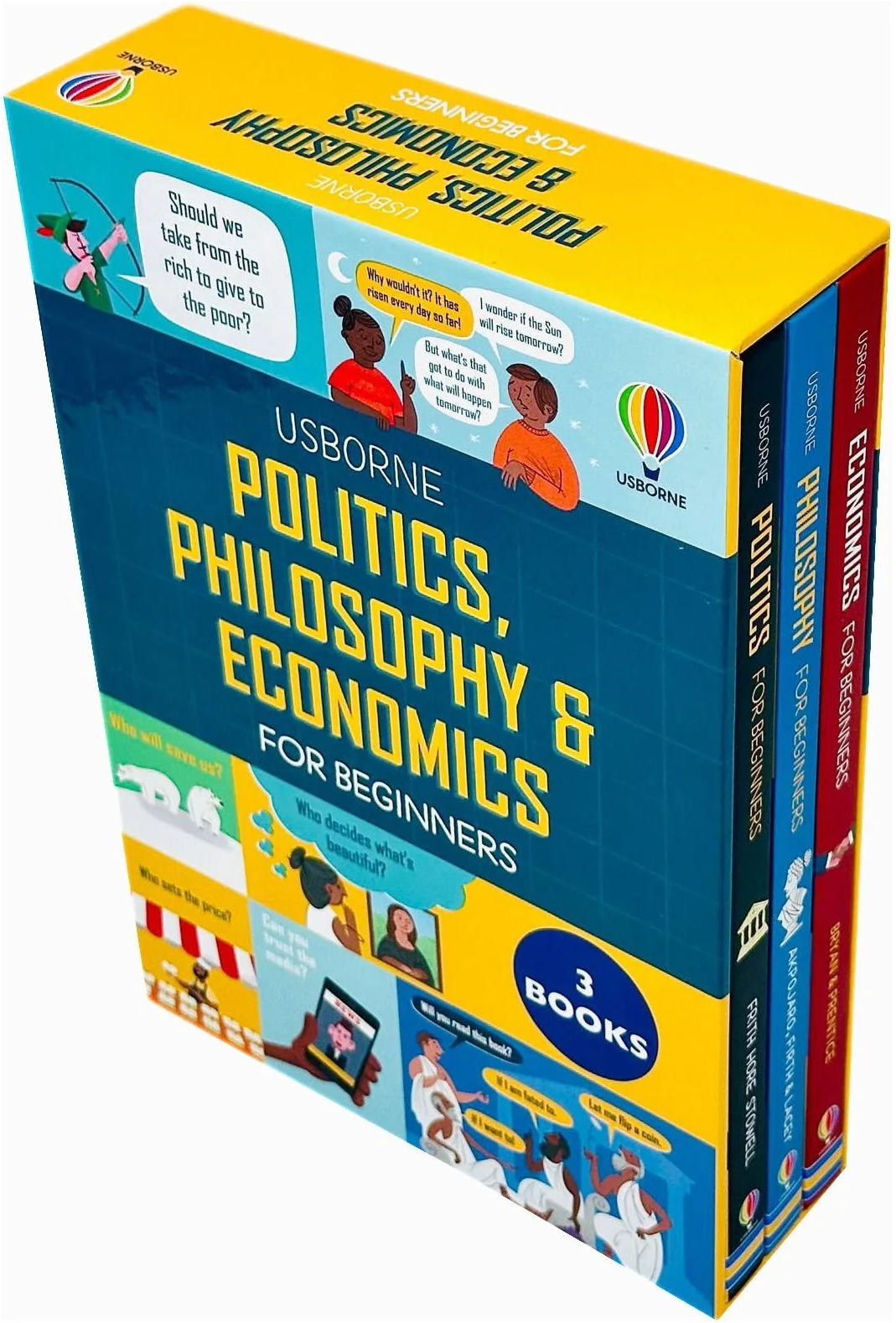
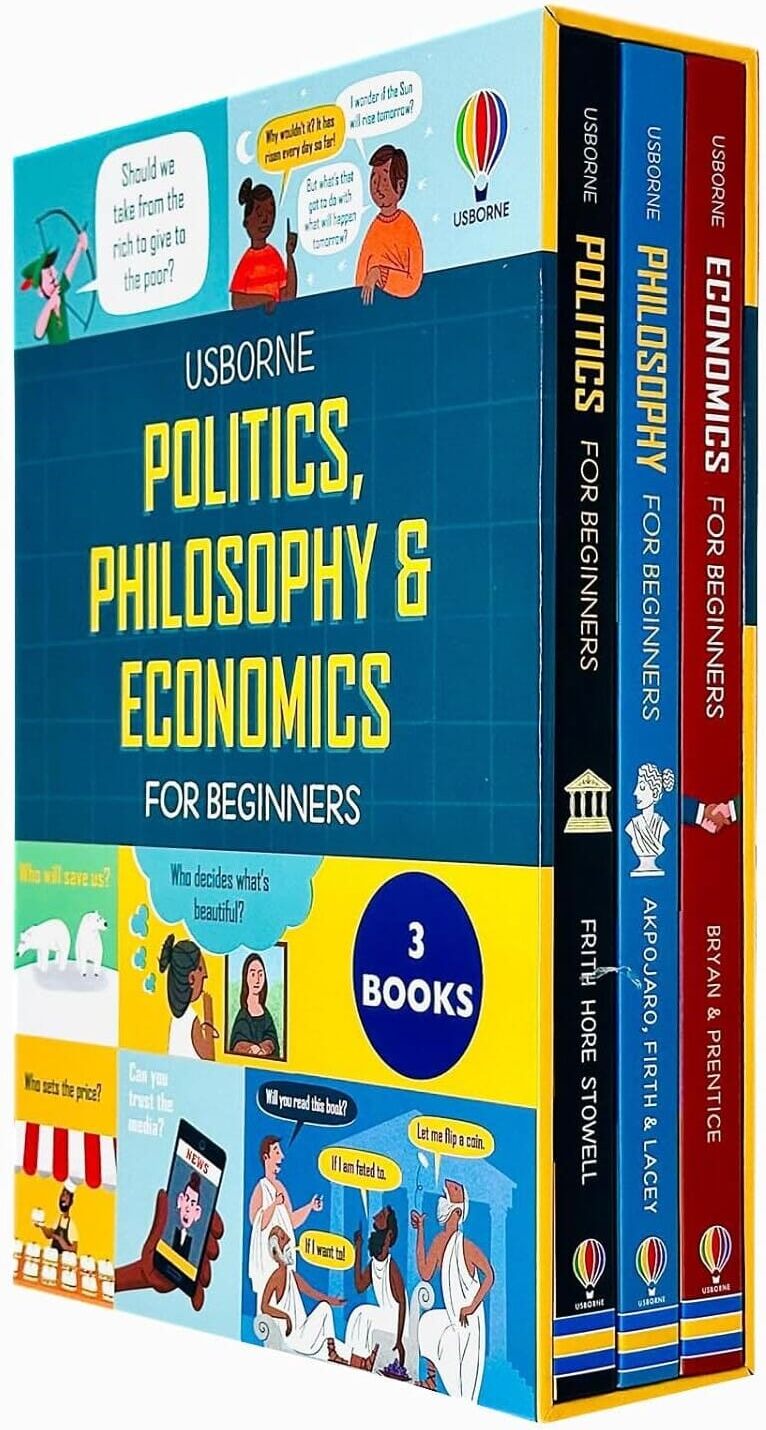
Usborne For Beginners Series: Politics, Philosophy and Economics 3 Books Collection Box Set - Ages 11+ - Hardback Usborne Publishing LtdTitles in this set: 1. Politics for Beginners 2. Philosophy for Beginners 3. Economics for Beginners Politics for Beginners An informative guide to political systems, elections, voting and government, and issues including feminism, human rights, freedom of speech and fake news, all explained with clear text and bright, infographic-style illustrations. Includes tips on how to argue and debate, a glossary, and links to specially selected websites with more information. Philosophy for Beginners Philosophy is a way of thinking about just about anything. It asks big questions, such as "how can I be good?" or "what makes something beautiful?" Using lively examples, humorous illustrations and simple thought experiments, this book opens up the world of philosophy to both children and adults and includes links to recommended websites with videos, games and activities to find out more. Economics for Beginners Nobody has everything they need, all the time - so how can we make do with what we have? Economics is all about understanding the choices we make to solve this problem. With bright, infographics pictures, this informative book describes why markets are so important, how businesses work out what to sell, and how governments choose how to run a country. Includes Usborne Quicklinks to specially selected websites for more information.14,95 £*Shipping: 2,99 £Secure redirect to the provider
-
Are these proofs of God?
The concept of God is a matter of personal belief and faith, and therefore cannot be proven or disproven through scientific or logical proofs. The arguments presented in the question, such as the cosmological argument and the teleological argument, are attempts to provide rational justifications for the existence of God, but they are not definitive proofs. Ultimately, belief in God is a deeply personal and subjective matter, and different individuals may find different types of evidence or reasoning compelling in forming their beliefs. **
-
What are proofs of gases?
Proofs of gases refer to evidence or demonstrations that show the existence or properties of gases. This can include physical observations such as the expansion of a gas to fill its container, the ability of gases to exert pressure, or the changes in volume and pressure with temperature. Additionally, chemical reactions involving gases can also serve as proofs, such as the combustion of a gas or its reaction with other substances. Overall, proofs of gases are the empirical evidence and experimental results that support our understanding of the behavior and characteristics of gases. **
-
Are there also scientific proofs for God, if there are already scientific proofs for him?
The existence of God is a matter of faith and belief, rather than scientific proof. While some people may argue that certain scientific phenomena or philosophical arguments point to the existence of a higher power, these are not universally accepted as scientific proofs for God. Science and religion operate in different realms, with science focusing on empirical evidence and testable hypotheses, while religion deals with matters of faith and spirituality. Therefore, the question of scientific proofs for God remains a topic of philosophical and theological debate rather than scientific consensus. **
-
Can someone explain proofs of God?
Proofs of God are arguments or reasoning put forth to demonstrate the existence of a higher power or deity. There are various philosophical arguments that have been proposed throughout history to support the existence of God, such as the cosmological argument, teleological argument, and ontological argument. These proofs are based on different premises and logic, aiming to provide rational justification for the belief in a divine being. However, it is important to note that these proofs are not universally accepted and are subject to criticism and debate within the fields of philosophy and theology. **

What are the proofs against Islam?
There are various criticisms and arguments against Islam, including claims that the religion promotes violence and oppression, that it restricts personal freedoms and rights, and that it is incompatible with modern values and scientific knowledge. Some critics also point to historical events and actions by Muslims to argue against the validity of Islam. Additionally, there are debates about the interpretation of Islamic texts and teachings, with some claiming that they are outdated or misinterpreted. Ultimately, the proofs against Islam are subjective and vary depending on individual perspectives and beliefs. **
What are the proofs of reality?
Proofs of reality can vary depending on the context, but some common proofs include empirical evidence, logical reasoning, and consensus among multiple observers. Empirical evidence involves using our senses or instruments to observe and measure the physical world. Logical reasoning involves using rational arguments to deduce the existence of something. Consensus among multiple observers can also serve as a proof of reality, as it suggests that multiple independent perspectives are converging on the same conclusion. **
Top-Angebote
Products related to Proofs:
-
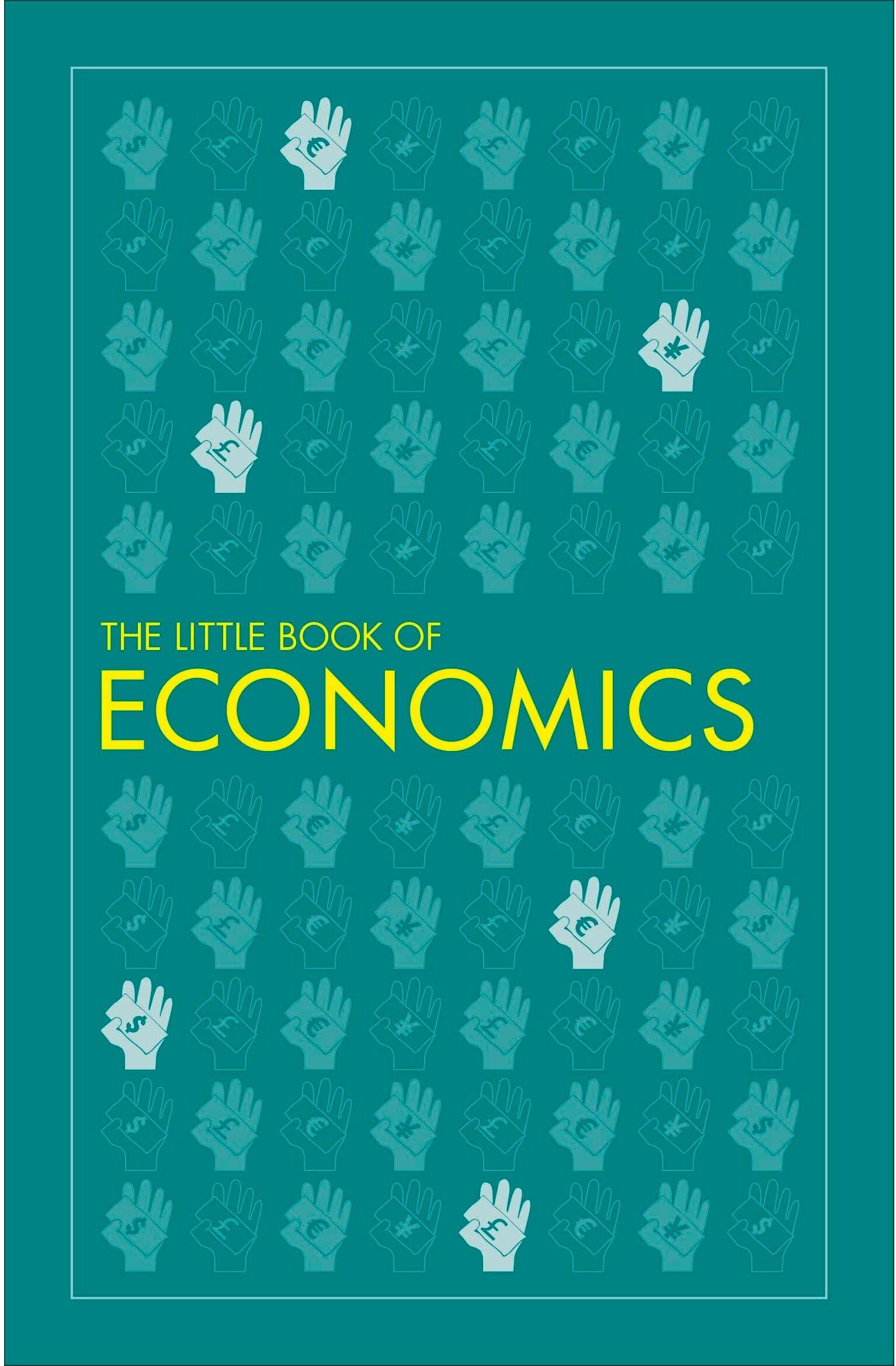
The Little Book of Economics (DK Big Ideas Series)This book is the perfect introduction to the subject of economics and economic ideas through history. From the earliest forms of currency to the Industrial Revolution, and from the birth of the stock market to free-market capitalism and globalized trade, The Little Book of Economics brings economic theory and the work of key economists to life. Journeying through centuries of economic thought, it is the perfect pocket-sized guide to the subject. Packed with infographics and flowcharts that explain complex concepts clearly and simply, The Little Book of Economics offers you a combination of clear text and hard-working infographics in a portable format that is perfect for reading on the go.5,99 £*Shipping: 2,99 £Secure redirect to the provider
-
Usborne Big Subjects For Beginners 3 Books Box Set (Politics, Philosophy and Economics)Usborne Big Subjects For Beginners 3 Books Box Set (Politics, Philosophy and Economics) Economics for Beginners Nobody has everything they need, all the time - so how can we make do with what we have? Economics is all about understanding the choices we make to solve this problem. With bright, infographics pictures, this informative book describes why markets. Politics for Beginners With Brexit looming and constant political uncertainty in the UK, people are more confused by politics than ever before. Politics for Beginners answers the questions that people are afraid to ask, offering a no-nonsense guide to what politics is all about. Philosophy for Beginners Philosophy is a way of thinking about just about anything. It asks big questions, such as "how can I be good?" or "what makes something beautiful?" Using lively examples, humorous illustrations and simple thought experiments, this book opens up the world of philosophy to both children and adults and includes links to recommended. Related Tags: Usborne, Usbourne Books14,95 £*Shipping: 2,99 £Secure redirect to the provider
-
Summersdale Publishers The Little Book of Philosophy, Sociology, Economics & Psychology 4 Books Collection SetThe Little Book of Philosophy Philosophy is a quest for wisdom and knowledge; philosophia in Ancient Greek literally means “love of wisdom”. The aim of philosophy is to ask and explore life’s big questions to help us work out what we can know and how we can live a good life. Today, in a world of fake news, embarking on a quest for truth couldn’t be more important. The Little Book of Sociology From the smallest everyday interaction to the impact of vast systemic change, societies are brimming with fascinating phenomena we all want to understand more clearly.There's never been a more important moment to grasp what's going on around us, and this pocket-sized guide offers an engaging introduction to the key sociological concepts. The Little Book of Economics This Book will bring you up to speed on the basics of micro- and macroeconomics and demystify the world of taxes, trade, investments and finance, in simple English and with easy-to-follow examples.By the end of this crash course, you will have a grasp on all the essential terms, concepts and theories you need to know to understand modern-day. The Little Book of Psychology If you want to know your Freud from your Jung and your Milgram from your Maslow, strap in for this whirlwind tour of the highlights of psychology. Including accessible primers on: - The early thinkers who contributed to psychological ideas and the birth of modern psychology- Famous (and often controversial) experiments and their repercussions.12,99 £*Shipping: 2,99 £Secure redirect to the provider
-
What are the proofs for destiny and what are the proofs for randomness?
The proofs for destiny often come from religious or spiritual beliefs, which suggest that there is a predetermined path or plan for each individual. Some people also point to experiences or events in their lives that seem to be too coincidental to be random, leading them to believe in destiny. On the other hand, the proofs for randomness often come from scientific and statistical evidence. Randomness can be observed in natural phenomena, such as the unpredictable behavior of particles at the quantum level. Additionally, statistical analysis of events and outcomes can show patterns that are consistent with randomness rather than a predetermined plan. **
-
What are proofs by induction?
Proofs by induction are a mathematical technique used to prove that a statement holds for all natural numbers. The proof typically involves two steps: the base case, where the statement is shown to be true for the smallest natural number, and the inductive step, where it is shown that if the statement holds for a particular natural number, then it also holds for the next natural number. This process allows us to conclude that the statement holds for all natural numbers. Proofs by induction are commonly used in various areas of mathematics, such as algebra, calculus, and number theory. **
-
Are these proofs of God?
The concept of God is a matter of personal belief and faith, and therefore cannot be proven or disproven through scientific or logical proofs. The arguments presented in the question, such as the cosmological argument and the teleological argument, are attempts to provide rational justifications for the existence of God, but they are not definitive proofs. Ultimately, belief in God is a deeply personal and subjective matter, and different individuals may find different types of evidence or reasoning compelling in forming their beliefs. **
-
What are proofs of gases?
Proofs of gases refer to evidence or demonstrations that show the existence or properties of gases. This can include physical observations such as the expansion of a gas to fill its container, the ability of gases to exert pressure, or the changes in volume and pressure with temperature. Additionally, chemical reactions involving gases can also serve as proofs, such as the combustion of a gas or its reaction with other substances. Overall, proofs of gases are the empirical evidence and experimental results that support our understanding of the behavior and characteristics of gases. **
Similar search terms for Proofs
-
DK The Little Book Of Series 6 Books Collection Set (Economics, Politics, Shakespeare, Philosophy, Psychology, History)The Little Book Of Economics From the earliest forms of currency to the Industrial Revolution, and from the birth of the stock market to free-market capitalism and globalized trade, The Little Book of Economics brings economic theory and the work of key economists to life. Journeying through centuries of economic thought, it is the perfect pocket-sized guide to the subject. The Little Book Of Politics From the origins of democracy to Machiavelli's cunning statecraft, and from Rousseau's "social contract" to the American Declaration of Independence, Marxist communism, the dawn of populism, and identity politics, The Little Book of Politics examines the philosophies behind the different political beliefs and methods of government used around the world over the course of human history. The Little Book Of Shakespeare This bold book covers every work, from the comedies of Twelfth Night and As You Like It to the tragedies of Julius Caesar and Hamlet, plus lost plays and less well-known works of poetry. Easy-to-understand graphics and illustrations bring the themes, plots, characters and language of Shakespeare to life, including illustrated timelines which offer an at-a-glance summary of the action for each play. With detailed plot summaries and an in-depth analysis of the major characters and themes, this is a brilliant, innovative exploration of the entire canon of Shakespeare plays, sonnets and poetry. The Little Book Of Philosophy To the complete novice learning about philosophy can be daunting - The Little Book of Philosophy changes all that. With the use of powerful and easy-to-follow images, famous quotations, and explanations that are easily understandable, this book cuts through any misunderstandings to demystify the subject. The Little Book Of Psychology DK's The Little Book of Psychology answers all these questions and provides an insight into this fascinating field of science. Whether you are a student, an expert, a novice, or have a general interest in the human mind, this portable guide is the perfect choice to start exploring and understanding psychology. The Little Book Of History The Little Book of History charts world history from the dawn of civilisation to the modern culture we live in today. From the origins of homo-sapiens to the release of Nelson Mandela, from the French Revolution to the Space Race, The Little Book of History is a stunning exploration of the human timeline up to and including modern Islam, the world wide web, and the global financial crisis.14,99 £*Shipping: 2,99 £Secure redirect to the provider
-
Usborne For Beginners Series: Politics, Philosophy and Economics 3 Books Collection Box Set - Ages 11+ - Hardback Usborne Publishing LtdTitles in this set: 1. Politics for Beginners 2. Philosophy for Beginners 3. Economics for Beginners Politics for Beginners An informative guide to political systems, elections, voting and government, and issues including feminism, human rights, freedom of speech and fake news, all explained with clear text and bright, infographic-style illustrations. Includes tips on how to argue and debate, a glossary, and links to specially selected websites with more information. Philosophy for Beginners Philosophy is a way of thinking about just about anything. It asks big questions, such as "how can I be good?" or "what makes something beautiful?" Using lively examples, humorous illustrations and simple thought experiments, this book opens up the world of philosophy to both children and adults and includes links to recommended websites with videos, games and activities to find out more. Economics for Beginners Nobody has everything they need, all the time - so how can we make do with what we have? Economics is all about understanding the choices we make to solve this problem. With bright, infographics pictures, this informative book describes why markets are so important, how businesses work out what to sell, and how governments choose how to run a country. Includes Usborne Quicklinks to specially selected websites for more information.14,95 £*Shipping: 2,99 £Secure redirect to the provider
-
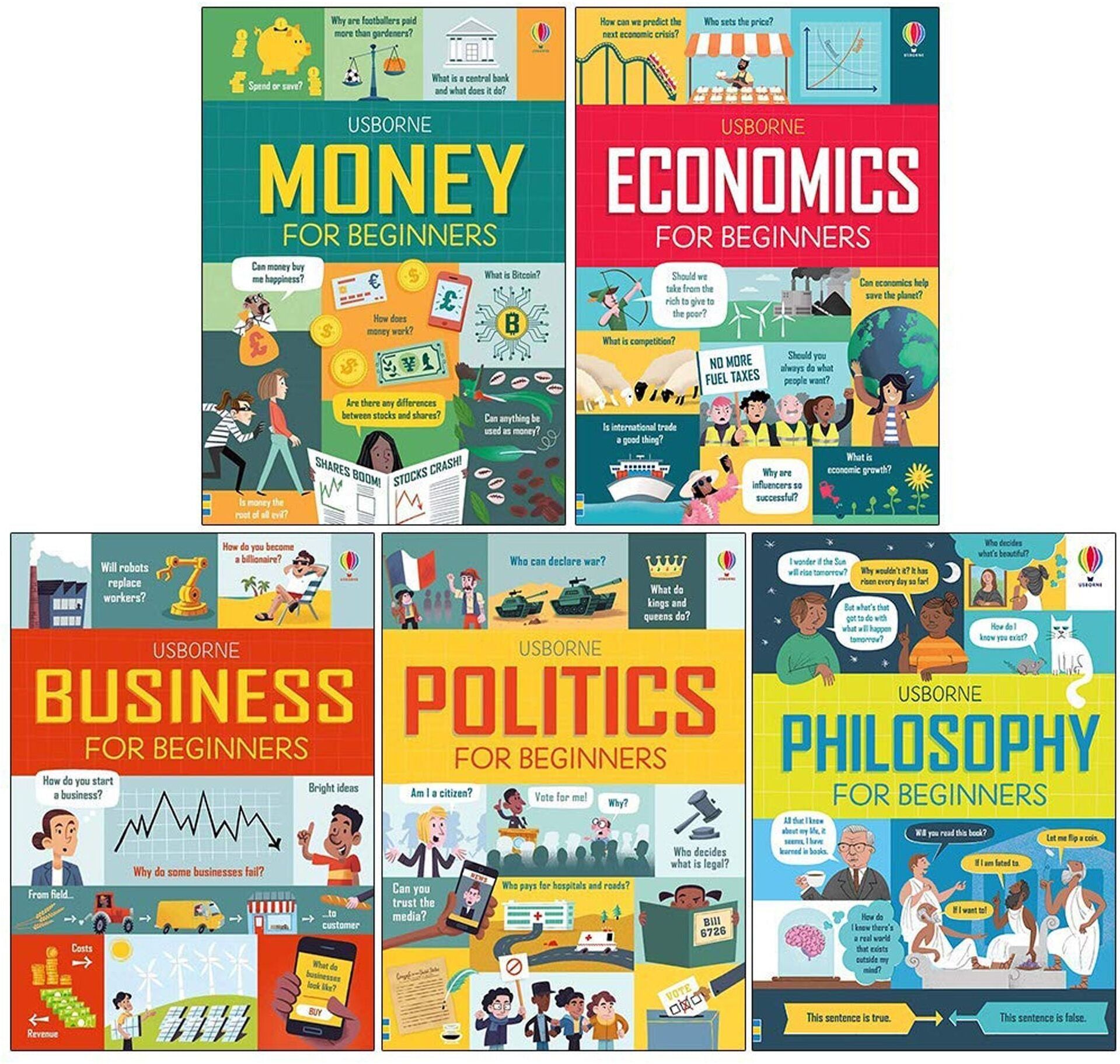
Usborne Big Subjects for Beginners 5 Books Collection Box Set Money, Economics, Business, Politics & Philosophy – Illustrated Educational Learning GHelp children understand the world around them with the Usborne Big Subjects for Beginners – 5 Books Collection Box Set, a beautifully illustrated introduction to some of the most important topics in modern life. Each book breaks down complex ideas into simple, engaging explanations perfect for kids, beginners, and curious young minds.Packed with colourful diagrams, friendly illustrations, quick facts, and clear examples, this set helps young readers explore big ideas with confidence. This educational collection includes: Money for Beginners – Understanding money, saving, spending, and how currency works. Economics for Beginners – Supply, demand, trade, markets, and how economies function. Business for Beginners – How businesses start, operate, grow, and succeed. Politics for Beginners – Governments, elections, laws, democracy, and world politics explained. Philosophy for Beginners – Big questions about life, knowledge, ethics, and thinking skills. Perfect for ages 9–14, home learning, school topics, and young readers who love discovering new knowledge. Related Tags: Usborne, Usbourne Books19,99 £*Shipping: 2,99 £Secure redirect to the provider
-
Touch of Class Noble Leader Wall Accent Brown , BrownOne can always recognize a Noble Leader by the traditional feather headdress. This resin wall accent is highly detailed with tribal designs and includes handpainted shades of blue, brown, white, and terra cotta. Measures 13.5 Wx3 Dx16.5 H. Imported....69,99 $*Shipping: 0,00 $Secure redirect to the provider
-
Are there also scientific proofs for God, if there are already scientific proofs for him?
The existence of God is a matter of faith and belief, rather than scientific proof. While some people may argue that certain scientific phenomena or philosophical arguments point to the existence of a higher power, these are not universally accepted as scientific proofs for God. Science and religion operate in different realms, with science focusing on empirical evidence and testable hypotheses, while religion deals with matters of faith and spirituality. Therefore, the question of scientific proofs for God remains a topic of philosophical and theological debate rather than scientific consensus. **
-
Can someone explain proofs of God?
Proofs of God are arguments or reasoning put forth to demonstrate the existence of a higher power or deity. There are various philosophical arguments that have been proposed throughout history to support the existence of God, such as the cosmological argument, teleological argument, and ontological argument. These proofs are based on different premises and logic, aiming to provide rational justification for the belief in a divine being. However, it is important to note that these proofs are not universally accepted and are subject to criticism and debate within the fields of philosophy and theology. **
-
What are the proofs against Islam?
There are various criticisms and arguments against Islam, including claims that the religion promotes violence and oppression, that it restricts personal freedoms and rights, and that it is incompatible with modern values and scientific knowledge. Some critics also point to historical events and actions by Muslims to argue against the validity of Islam. Additionally, there are debates about the interpretation of Islamic texts and teachings, with some claiming that they are outdated or misinterpreted. Ultimately, the proofs against Islam are subjective and vary depending on individual perspectives and beliefs. **
-
What are the proofs of reality?
Proofs of reality can vary depending on the context, but some common proofs include empirical evidence, logical reasoning, and consensus among multiple observers. Empirical evidence involves using our senses or instruments to observe and measure the physical world. Logical reasoning involves using rational arguments to deduce the existence of something. Consensus among multiple observers can also serve as a proof of reality, as it suggests that multiple independent perspectives are converging on the same conclusion. **
* All prices are inclusive of VAT and, if applicable, plus shipping costs. The offer information is based on the details provided by the respective shop and is updated through automated processes. Real-time updates do not occur, so deviations can occur in individual cases. ** Note: Parts of this content were created by AI.