Buy jean-lucdehaene.eu ?
We are moving the project
jean-lucdehaene.eu .
Are you interested in purchasing the domain
jean-lucdehaene.eu ?
domain@kv-gmbh.de · 0541-91531010
Buy jean-lucdehaene.eu ?
What is the minimum price in economics?
In economics, the minimum price refers to the lowest price at which a good or service can be sold in a market. This minimum price is often set by the government through price floors or minimum wage laws to ensure that producers receive a certain level of income for their products or that workers are paid a minimum wage. The minimum price helps to prevent prices from falling too low and can also be used to support certain industries or protect workers from exploitation. However, setting a minimum price can also lead to surpluses and inefficiencies in the market. **
How can the government intervene in price formation?
The government can intervene in price formation through various means, including: 1. Price controls: The government can set maximum or minimum prices for certain goods or services to prevent prices from rising too high or falling too low. This can help ensure affordability for consumers or fair compensation for producers. 2. Subsidies: The government can provide financial assistance to producers or consumers to help lower the cost of goods or services, which can influence prices in the market. 3. Taxes: The government can impose taxes on certain goods or services to increase their prices, which can help regulate consumption or generate revenue for public services. 4. Regulations: The government can implement regulations on industries or markets to control pricing practices, prevent monopolies or ensure fair competition. 5. Trade policies: The government can impose tariffs or quotas on imported goods to protect domestic industries, which can impact prices in the market. Overall, government intervention in price formation is aimed at achieving specific economic or social objectives, such as promoting competition, ensuring consumer welfare, or stabilizing markets. **
Similar search terms for Price
Top-Angebote
Products related to Price:
-
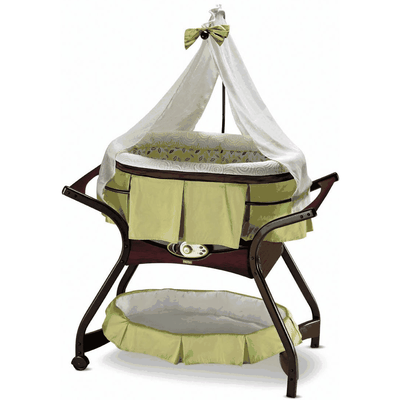
Fisher-Price Zen Collection Gliding BassinetA balance between beauty and function ?The beauty and function of this bassinet work in harmony to soothe baby. Plush bedding in premium textured fabrics and a beautiful sheer canopy create a soothing environment where baby can enjoy the gliding...174,99 $*Shipping: 0,00 $Secure redirect to the provider
-
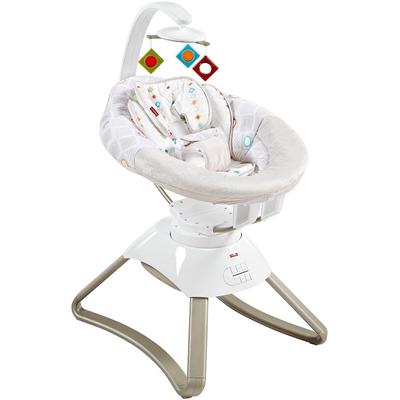
Fisher-Price Soothing Motions Baby SeatSweet serenity is closer than you think ? with a soothing seat inspired by the natural motion of mom or dad. Customize the motion to whatever baby likes best. Bounce, sway, or bounce and sway together, in the deep, cozy baby seat. Calming...160,00 $*Shipping: 0,00 $Secure redirect to the provider
-
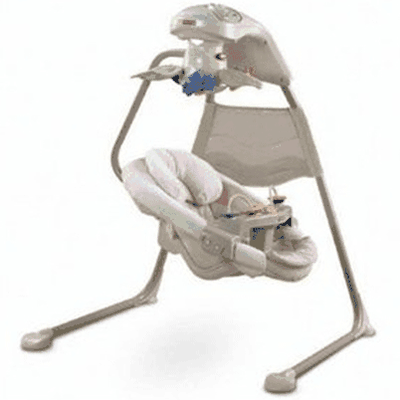
Fisher-Price Papasan Cradle Swing N1973Swing provides soothing swinging with both front to back like a traditional swing, and side to side motion like a cradle swing; An overhead motorized mobile incorporates 3 characters including a bird, a butterfly, and a dragonfly; Mirrored globe...129,99 $*Shipping: 0,00 $Secure redirect to the provider
-
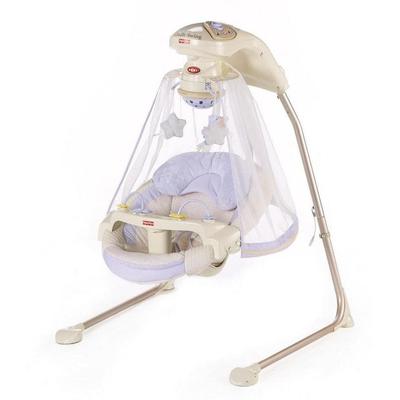
Fisher-Price Starlight Papasan Cradle SwingStar light, star bright?every parent wishes for a swing like this for baby! The comfy-cozy papasan seat and head support cradle baby in cushy comfort as he swings in a side-to-side or front-to-back swinging motion. A sweet little canopy surrounds...129,99 $*Shipping: 0,00 $Secure redirect to the provider
-
What criteria justify government intervention in price formation?
Government intervention in price formation is justified when there is market failure, such as monopolies, externalities, or public goods. Monopolies can lead to higher prices and reduced competition, so government intervention can help regulate prices and promote competition. Externalities, such as pollution, can lead to social costs that are not reflected in market prices, so government intervention can help internalize these costs. Public goods, like national defense or infrastructure, may not be provided efficiently by the market, so government intervention can ensure their provision. Overall, government intervention in price formation is justified when it can correct market failures and promote economic efficiency. **
-
Why doesn't the government cap the electricity price?
The government may choose not to cap electricity prices because doing so could discourage investment in the energy sector, leading to potential shortages and unreliable service. Additionally, capping prices could distort market forces and hinder competition, ultimately resulting in inefficiencies and reduced innovation. Instead, the government may opt to regulate the industry through other means, such as setting quality standards, promoting renewable energy sources, or providing subsidies to low-income households. **
-
Usury price or regular price?
The concept of usury price refers to an excessively high interest rate charged on a loan, often considered unfair or exploitative. On the other hand, regular price refers to the standard or customary price for a good or service. In general, usury price is considered unethical and may be regulated by laws, while regular price is based on market conditions and competition. It is important to be aware of usury practices and seek fair and transparent pricing in financial transactions. **
-
Was Napoleon a brilliant politician and military leader?
Napoleon Bonaparte was indeed a brilliant politician and military leader. He rose to power through his strategic military victories and strong leadership skills. As a politician, he implemented numerous reforms that modernized France and established the Napoleonic Code. His ability to navigate complex political situations and maintain control over a vast empire demonstrated his political acumen. Overall, Napoleon's achievements in both military and political spheres solidify his reputation as a brilliant leader. **

Why doesn't the government cap the price of gas and electricity?
The government does not cap the price of gas and electricity because it believes in free market principles and competition. Capping prices could discourage investment in the energy sector and lead to shortages. Additionally, it could also lead to inefficiencies and a lack of innovation in the industry. Instead, the government may choose to regulate the energy market to ensure fair competition and protect consumers from price gouging. **
What is the significance of piece subsidies and minimum price policy in economics?
Piece subsidies and minimum price policies are significant in economics because they can influence the supply and demand of goods and services. Piece subsidies, which provide a subsidy for each unit produced, can encourage producers to increase their output, leading to an increase in supply. On the other hand, minimum price policies can help to stabilize prices and ensure that producers receive a fair price for their goods, which can help to support the livelihoods of producers and maintain a stable market. Both policies can have a significant impact on the allocation of resources and the overall functioning of markets. **
Top-Angebote
Products related to Price:
-
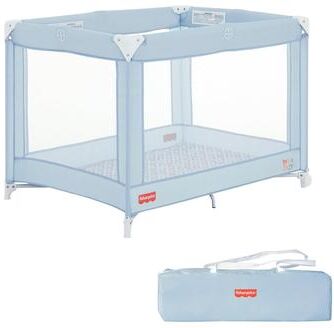
Fisher Price by Dream On Me Fisher-Price Play All Day Baby PlayardIntroducing the Fisher Price™ Play All Day Playard by Dream On Me - where playtime meets portable perfection. Designed for families who love adventure, it's foldable, portable, and comes with a convenient carry bag for those impromptu playdates.85,49 $*Shipping: 0,00 $Secure redirect to the provider
-
Fisher-Price Zen Collection Gliding BassinetA balance between beauty and function ?The beauty and function of this bassinet work in harmony to soothe baby. Plush bedding in premium textured fabrics and a beautiful sheer canopy create a soothing environment where baby can enjoy the gliding...174,99 $*Shipping: 0,00 $Secure redirect to the provider
-
Fisher-Price Soothing Motions Baby SeatSweet serenity is closer than you think ? with a soothing seat inspired by the natural motion of mom or dad. Customize the motion to whatever baby likes best. Bounce, sway, or bounce and sway together, in the deep, cozy baby seat. Calming...160,00 $*Shipping: 0,00 $Secure redirect to the provider
-
What is the minimum price in economics?
In economics, the minimum price refers to the lowest price at which a good or service can be sold in a market. This minimum price is often set by the government through price floors or minimum wage laws to ensure that producers receive a certain level of income for their products or that workers are paid a minimum wage. The minimum price helps to prevent prices from falling too low and can also be used to support certain industries or protect workers from exploitation. However, setting a minimum price can also lead to surpluses and inefficiencies in the market. **
-
How can the government intervene in price formation?
The government can intervene in price formation through various means, including: 1. Price controls: The government can set maximum or minimum prices for certain goods or services to prevent prices from rising too high or falling too low. This can help ensure affordability for consumers or fair compensation for producers. 2. Subsidies: The government can provide financial assistance to producers or consumers to help lower the cost of goods or services, which can influence prices in the market. 3. Taxes: The government can impose taxes on certain goods or services to increase their prices, which can help regulate consumption or generate revenue for public services. 4. Regulations: The government can implement regulations on industries or markets to control pricing practices, prevent monopolies or ensure fair competition. 5. Trade policies: The government can impose tariffs or quotas on imported goods to protect domestic industries, which can impact prices in the market. Overall, government intervention in price formation is aimed at achieving specific economic or social objectives, such as promoting competition, ensuring consumer welfare, or stabilizing markets. **
-
What criteria justify government intervention in price formation?
Government intervention in price formation is justified when there is market failure, such as monopolies, externalities, or public goods. Monopolies can lead to higher prices and reduced competition, so government intervention can help regulate prices and promote competition. Externalities, such as pollution, can lead to social costs that are not reflected in market prices, so government intervention can help internalize these costs. Public goods, like national defense or infrastructure, may not be provided efficiently by the market, so government intervention can ensure their provision. Overall, government intervention in price formation is justified when it can correct market failures and promote economic efficiency. **
-
Why doesn't the government cap the electricity price?
The government may choose not to cap electricity prices because doing so could discourage investment in the energy sector, leading to potential shortages and unreliable service. Additionally, capping prices could distort market forces and hinder competition, ultimately resulting in inefficiencies and reduced innovation. Instead, the government may opt to regulate the industry through other means, such as setting quality standards, promoting renewable energy sources, or providing subsidies to low-income households. **
Similar search terms for Price
-
Fisher-Price Papasan Cradle Swing N1973Swing provides soothing swinging with both front to back like a traditional swing, and side to side motion like a cradle swing; An overhead motorized mobile incorporates 3 characters including a bird, a butterfly, and a dragonfly; Mirrored globe...129,99 $*Shipping: 0,00 $Secure redirect to the provider
-
Fisher-Price Starlight Papasan Cradle SwingStar light, star bright?every parent wishes for a swing like this for baby! The comfy-cozy papasan seat and head support cradle baby in cushy comfort as he swings in a side-to-side or front-to-back swinging motion. A sweet little canopy surrounds...129,99 $*Shipping: 0,00 $Secure redirect to the provider
-
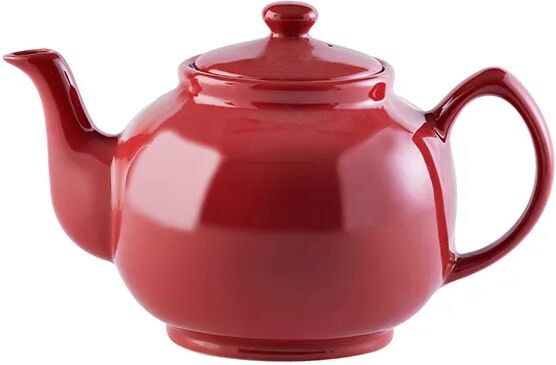
Price & Kensington Red 10 Cup TeapotMade from fine stoneware and an attractive gloss glaze, the Price & Kensington Red 10 Cup Teapot has a 1500ml capacity and is full of charm and character. Designed in Great Britain, this impressively sized teapot is perfect when entertaining large groups of people. Microwave and dishwasher safe. Dimensions: W13.5cm x H16cm x L23.5cm. Other Price & Kensington Teapot colours and capacities are available separately.18,90 £*Shipping: 3,50 £Secure redirect to the provider
-
Price & Kensington Daisy 6 Cup TeapotThis Price & Kensington Daisy 6 Cup Teapot features a white glaze with whimsical daisy embossments with a delicate hand painted yellow centres. The matching lid replicate this daisy detail with a yellow painted knob. Made from durable stoneware to keep the tea hotter for longer with a non-drip spout and an ergonomic pouring handle, this teapot is great for entertaining or for enjoying ever day. Capacity: 1.1 litres / 6 cup. Dimensions: 13.8(H) x 14.3(W) x 23.7(L)cm.15,75 £*Shipping: 3,50 £Secure redirect to the provider
-
Usury price or regular price?
The concept of usury price refers to an excessively high interest rate charged on a loan, often considered unfair or exploitative. On the other hand, regular price refers to the standard or customary price for a good or service. In general, usury price is considered unethical and may be regulated by laws, while regular price is based on market conditions and competition. It is important to be aware of usury practices and seek fair and transparent pricing in financial transactions. **
-
Was Napoleon a brilliant politician and military leader?
Napoleon Bonaparte was indeed a brilliant politician and military leader. He rose to power through his strategic military victories and strong leadership skills. As a politician, he implemented numerous reforms that modernized France and established the Napoleonic Code. His ability to navigate complex political situations and maintain control over a vast empire demonstrated his political acumen. Overall, Napoleon's achievements in both military and political spheres solidify his reputation as a brilliant leader. **
-
Why doesn't the government cap the price of gas and electricity?
The government does not cap the price of gas and electricity because it believes in free market principles and competition. Capping prices could discourage investment in the energy sector and lead to shortages. Additionally, it could also lead to inefficiencies and a lack of innovation in the industry. Instead, the government may choose to regulate the energy market to ensure fair competition and protect consumers from price gouging. **
-
What is the significance of piece subsidies and minimum price policy in economics?
Piece subsidies and minimum price policies are significant in economics because they can influence the supply and demand of goods and services. Piece subsidies, which provide a subsidy for each unit produced, can encourage producers to increase their output, leading to an increase in supply. On the other hand, minimum price policies can help to stabilize prices and ensure that producers receive a fair price for their goods, which can help to support the livelihoods of producers and maintain a stable market. Both policies can have a significant impact on the allocation of resources and the overall functioning of markets. **
* All prices are inclusive of VAT and, if applicable, plus shipping costs. The offer information is based on the details provided by the respective shop and is updated through automated processes. Real-time updates do not occur, so deviations can occur in individual cases. ** Note: Parts of this content were created by AI.