Buy jean-lucdehaene.eu ?
We are moving the project
jean-lucdehaene.eu .
Are you interested in purchasing the domain
jean-lucdehaene.eu ?
domain@kv-gmbh.de · 0541-91531010
Buy jean-lucdehaene.eu ?
How can one improve their eloquence?
One can improve their eloquence by practicing public speaking and engaging in conversations with a variety of people. Reading widely and regularly can also help to expand one's vocabulary and improve their ability to express themselves effectively. Additionally, seeking feedback from others and actively working on refining one's communication skills can contribute to becoming more eloquent. Finally, being mindful of body language and nonverbal communication can also enhance one's overall eloquence. **
Why is eloquence equated with arrogance?
Eloquence is sometimes equated with arrogance because individuals who are highly articulate and persuasive in their speech may come across as overly confident or self-assured. This can be perceived as arrogance by others, especially if the speaker appears to be dismissive of differing opinions or overly focused on showcasing their own intelligence or superiority. Additionally, eloquent individuals may be seen as using their language skills to manipulate or dominate a conversation, which can contribute to the perception of arrogance. However, it's important to note that eloquence itself is not inherently arrogant, and it is possible to be articulate and persuasive without coming across as arrogant. **

Similar search terms for Eloquence
Top-Angebote
Products related to Eloquence:
-
Icon Books Ltd Mark Forsyth 3 Books Collection Set (The Etymologicon, The Elements of Eloquence & Horologicon)The Elements of Eloquence What is the actual connection between disgruntled and gruntled? What links church organs to organised crime, California to the Caliphate, or brackets to codpieces? The Etymologicon springs from Mark Forsyth's Inky Fool bog on the strange connections between words. It's an occasionally ribald, frequently witty and unerringly erudite guided tour of the secret labyrinth that lurks beneath the English language, taking in monks and monkeys, film buffs and buffaloes, and explaining precisely what the Rolling Stones have to do with gardening. The Horologicon The Horologicon (or book of hours) gives you the most extraordinary words in the English language, arranged according to the hour of the day when you really need them. Do you wake up feeling rough? Then you're philogrobolized. Pretending to work? That's fudgelling, which may lead to rizzling if you feel sleepy after lunch, though by dinner time you will have become a sparkling deipnosophist. From Mark Forsyth, author of the bestselling The Etymologicon, this is a book of weird words for familiar situations. From ante-jentacular to snudge by way of quafftide and wamblecropt, at last you can say, with utter accuracy, exactly what you mean. The Etymologicon What is the actual connection between disgruntled and gruntled? What links church organs to organised crime, California to the Caliphate, or brackets to codpieces? The Etymologicon springs from Mark Forsyth's Inky Fool blog on the strange connections between words. It's an occasionally ribald, frequently witty and unerringly erudite guided tour of the secret labyrinth that lurks beneath the English language, taking in monks and monkeys, film buffs and buffaloes, and explaining precisely what the Rolling Stones have to do with gardening.9,95 £*Shipping: 2,99 £Secure redirect to the provider
-
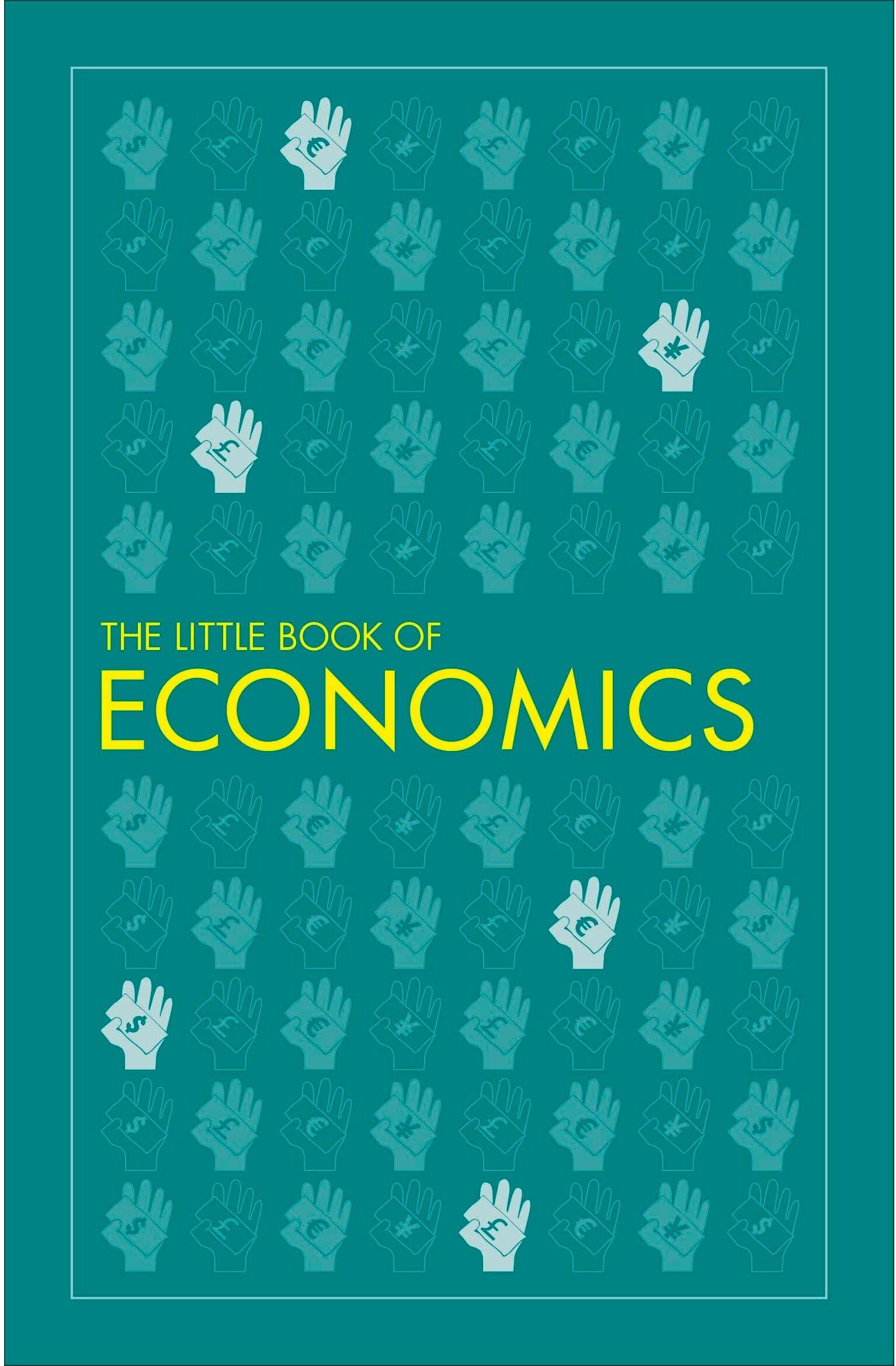
The Little Book of Economics (DK Big Ideas Series)This book is the perfect introduction to the subject of economics and economic ideas through history. From the earliest forms of currency to the Industrial Revolution, and from the birth of the stock market to free-market capitalism and globalized trade, The Little Book of Economics brings economic theory and the work of key economists to life. Journeying through centuries of economic thought, it is the perfect pocket-sized guide to the subject. Packed with infographics and flowcharts that explain complex concepts clearly and simply, The Little Book of Economics offers you a combination of clear text and hard-working infographics in a portable format that is perfect for reading on the go.5,99 £*Shipping: 2,99 £Secure redirect to the provider
-
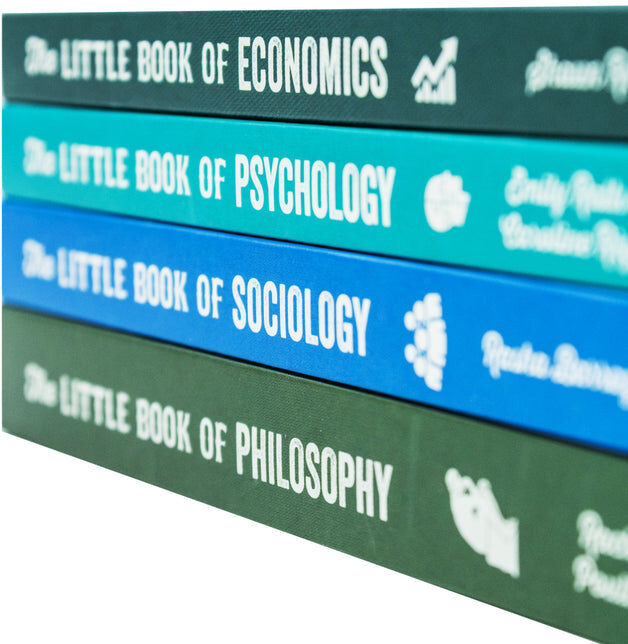
Summersdale Publishers The Little Book of Philosophy, Sociology, Economics & Psychology 4 Books Collection SetThe Little Book of Philosophy Philosophy is a quest for wisdom and knowledge; philosophia in Ancient Greek literally means “love of wisdom”. The aim of philosophy is to ask and explore life’s big questions to help us work out what we can know and how we can live a good life. Today, in a world of fake news, embarking on a quest for truth couldn’t be more important. The Little Book of Sociology From the smallest everyday interaction to the impact of vast systemic change, societies are brimming with fascinating phenomena we all want to understand more clearly.There's never been a more important moment to grasp what's going on around us, and this pocket-sized guide offers an engaging introduction to the key sociological concepts. The Little Book of Economics This Book will bring you up to speed on the basics of micro- and macroeconomics and demystify the world of taxes, trade, investments and finance, in simple English and with easy-to-follow examples.By the end of this crash course, you will have a grasp on all the essential terms, concepts and theories you need to know to understand modern-day. The Little Book of Psychology If you want to know your Freud from your Jung and your Milgram from your Maslow, strap in for this whirlwind tour of the highlights of psychology. Including accessible primers on: - The early thinkers who contributed to psychological ideas and the birth of modern psychology- Famous (and often controversial) experiments and their repercussions.12,99 £*Shipping: 2,99 £Secure redirect to the provider


-
How can I improve my eloquence?
Improving eloquence can be achieved through practice and dedication. One way to enhance your eloquence is by reading more books, articles, and other written materials to expand your vocabulary and improve your language skills. Additionally, practicing public speaking or engaging in debates can help you become more articulate and confident in expressing your thoughts and ideas. Finally, seeking feedback from others and actively listening to different perspectives can also help you refine your communication skills and become a more eloquent speaker. **
-
How can one improve their linguistic eloquence?
One can improve their linguistic eloquence by reading extensively in different genres and styles to expand their vocabulary and understanding of language. Additionally, practicing writing and speaking regularly can help to refine one's ability to articulate thoughts and ideas effectively. Seeking feedback from others and actively listening to well-spoken individuals can also provide valuable insights for improving linguistic eloquence. Finally, studying grammar and language structure can help to enhance one's command of the language. **
-
Is linguistic fluency, or eloquence, determined by genetics?
Linguistic fluency or eloquence is not solely determined by genetics. While some individuals may have a genetic predisposition towards language skills, environmental factors such as upbringing, education, and exposure to different languages play a significant role in developing linguistic abilities. Practice, exposure, and effort are also crucial in improving one's fluency and eloquence in a language. Ultimately, a combination of genetic factors and environmental influences contribute to an individual's linguistic abilities. **
-
What is the difference between eloquence and manipulation?
Eloquence is the ability to speak or write in a persuasive and articulate manner, using language effectively to convey one's thoughts and ideas. It is often associated with sincerity and authenticity, aiming to inspire or persuade others through the power of language. On the other hand, manipulation involves using language or other tactics to control or influence others for personal gain, often without their knowledge or consent. It can be deceptive and coercive, aiming to exploit or deceive others for one's own benefit. In essence, eloquence seeks to inspire and persuade through genuine communication, while manipulation seeks to control and influence for selfish motives. **
What is the meaning of foreign words and eloquence?
Foreign words refer to words that come from a language other than the one being spoken or written. Eloquence, on the other hand, refers to the ability to speak or write fluently and persuasively. When foreign words are used in a language, they can add depth, nuance, and sophistication to the communication, enhancing the speaker's eloquence and making their message more impactful. The use of foreign words and eloquence can also demonstrate a speaker's cultural awareness, education, and mastery of language. **
Can one improve their eloquence by regularly watching the show "Hart aber fair"?
Regularly watching the show "Hart aber fair" can potentially help improve one's eloquence as it exposes viewers to a variety of topics and discussions, which can expand their vocabulary and knowledge. By listening to the debates and arguments presented on the show, individuals can learn how to articulate their thoughts more effectively and develop their communication skills. However, improving eloquence also requires practice and active engagement in conversations and debates outside of just watching the show. **
Top-Angebote
Products related to Eloquence:
-
Touch of Class Eloquence Bloom Capiz Wall Art Cream , CreamThe Eloquence Bloom Capiz Shell Flower Wall Art is a dazzling, eye-popping floral display of incredible detail and dimension that will capture your attention. Metal wall art features a cream-finished flower with three layers of capiz shell petals...109,00 $*Shipping: 18,95 $Secure redirect to the provider
-
Icon Books Ltd Mark Forsyth 3 Books Collection Set (The Etymologicon, The Elements of Eloquence & Horologicon)The Elements of Eloquence What is the actual connection between disgruntled and gruntled? What links church organs to organised crime, California to the Caliphate, or brackets to codpieces? The Etymologicon springs from Mark Forsyth's Inky Fool bog on the strange connections between words. It's an occasionally ribald, frequently witty and unerringly erudite guided tour of the secret labyrinth that lurks beneath the English language, taking in monks and monkeys, film buffs and buffaloes, and explaining precisely what the Rolling Stones have to do with gardening. The Horologicon The Horologicon (or book of hours) gives you the most extraordinary words in the English language, arranged according to the hour of the day when you really need them. Do you wake up feeling rough? Then you're philogrobolized. Pretending to work? That's fudgelling, which may lead to rizzling if you feel sleepy after lunch, though by dinner time you will have become a sparkling deipnosophist. From Mark Forsyth, author of the bestselling The Etymologicon, this is a book of weird words for familiar situations. From ante-jentacular to snudge by way of quafftide and wamblecropt, at last you can say, with utter accuracy, exactly what you mean. The Etymologicon What is the actual connection between disgruntled and gruntled? What links church organs to organised crime, California to the Caliphate, or brackets to codpieces? The Etymologicon springs from Mark Forsyth's Inky Fool blog on the strange connections between words. It's an occasionally ribald, frequently witty and unerringly erudite guided tour of the secret labyrinth that lurks beneath the English language, taking in monks and monkeys, film buffs and buffaloes, and explaining precisely what the Rolling Stones have to do with gardening.9,95 £*Shipping: 2,99 £Secure redirect to the provider
-
The Little Book of Economics (DK Big Ideas Series)This book is the perfect introduction to the subject of economics and economic ideas through history. From the earliest forms of currency to the Industrial Revolution, and from the birth of the stock market to free-market capitalism and globalized trade, The Little Book of Economics brings economic theory and the work of key economists to life. Journeying through centuries of economic thought, it is the perfect pocket-sized guide to the subject. Packed with infographics and flowcharts that explain complex concepts clearly and simply, The Little Book of Economics offers you a combination of clear text and hard-working infographics in a portable format that is perfect for reading on the go.5,99 £*Shipping: 2,99 £Secure redirect to the provider
-
How can one improve their eloquence?
One can improve their eloquence by practicing public speaking and engaging in conversations with a variety of people. Reading widely and regularly can also help to expand one's vocabulary and improve their ability to express themselves effectively. Additionally, seeking feedback from others and actively working on refining one's communication skills can contribute to becoming more eloquent. Finally, being mindful of body language and nonverbal communication can also enhance one's overall eloquence. **
-
Why is eloquence equated with arrogance?
Eloquence is sometimes equated with arrogance because individuals who are highly articulate and persuasive in their speech may come across as overly confident or self-assured. This can be perceived as arrogance by others, especially if the speaker appears to be dismissive of differing opinions or overly focused on showcasing their own intelligence or superiority. Additionally, eloquent individuals may be seen as using their language skills to manipulate or dominate a conversation, which can contribute to the perception of arrogance. However, it's important to note that eloquence itself is not inherently arrogant, and it is possible to be articulate and persuasive without coming across as arrogant. **
-
How can I improve my eloquence?
Improving eloquence can be achieved through practice and dedication. One way to enhance your eloquence is by reading more books, articles, and other written materials to expand your vocabulary and improve your language skills. Additionally, practicing public speaking or engaging in debates can help you become more articulate and confident in expressing your thoughts and ideas. Finally, seeking feedback from others and actively listening to different perspectives can also help you refine your communication skills and become a more eloquent speaker. **
-
How can one improve their linguistic eloquence?
One can improve their linguistic eloquence by reading extensively in different genres and styles to expand their vocabulary and understanding of language. Additionally, practicing writing and speaking regularly can help to refine one's ability to articulate thoughts and ideas effectively. Seeking feedback from others and actively listening to well-spoken individuals can also provide valuable insights for improving linguistic eloquence. Finally, studying grammar and language structure can help to enhance one's command of the language. **
Similar search terms for Eloquence
-
Summersdale Publishers The Little Book of Philosophy, Sociology, Economics & Psychology 4 Books Collection SetThe Little Book of Philosophy Philosophy is a quest for wisdom and knowledge; philosophia in Ancient Greek literally means “love of wisdom”. The aim of philosophy is to ask and explore life’s big questions to help us work out what we can know and how we can live a good life. Today, in a world of fake news, embarking on a quest for truth couldn’t be more important. The Little Book of Sociology From the smallest everyday interaction to the impact of vast systemic change, societies are brimming with fascinating phenomena we all want to understand more clearly.There's never been a more important moment to grasp what's going on around us, and this pocket-sized guide offers an engaging introduction to the key sociological concepts. The Little Book of Economics This Book will bring you up to speed on the basics of micro- and macroeconomics and demystify the world of taxes, trade, investments and finance, in simple English and with easy-to-follow examples.By the end of this crash course, you will have a grasp on all the essential terms, concepts and theories you need to know to understand modern-day. The Little Book of Psychology If you want to know your Freud from your Jung and your Milgram from your Maslow, strap in for this whirlwind tour of the highlights of psychology. Including accessible primers on: - The early thinkers who contributed to psychological ideas and the birth of modern psychology- Famous (and often controversial) experiments and their repercussions.12,99 £*Shipping: 2,99 £Secure redirect to the provider
-
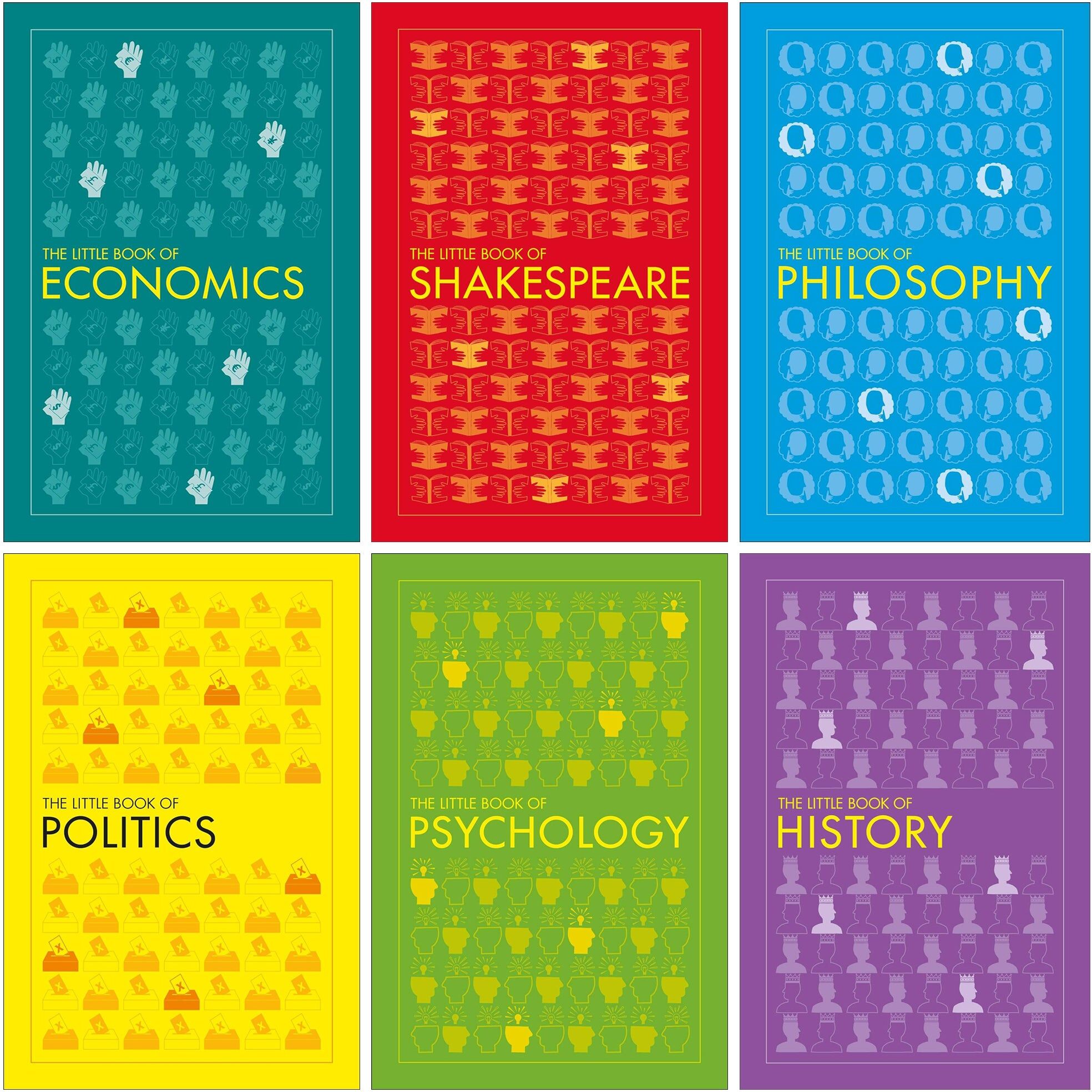
DK The Little Book Of Series 6 Books Collection Set (Economics, Politics, Shakespeare, Philosophy, Psychology, History)The Little Book Of Economics From the earliest forms of currency to the Industrial Revolution, and from the birth of the stock market to free-market capitalism and globalized trade, The Little Book of Economics brings economic theory and the work of key economists to life. Journeying through centuries of economic thought, it is the perfect pocket-sized guide to the subject. The Little Book Of Politics From the origins of democracy to Machiavelli's cunning statecraft, and from Rousseau's "social contract" to the American Declaration of Independence, Marxist communism, the dawn of populism, and identity politics, The Little Book of Politics examines the philosophies behind the different political beliefs and methods of government used around the world over the course of human history. The Little Book Of Shakespeare This bold book covers every work, from the comedies of Twelfth Night and As You Like It to the tragedies of Julius Caesar and Hamlet, plus lost plays and less well-known works of poetry. Easy-to-understand graphics and illustrations bring the themes, plots, characters and language of Shakespeare to life, including illustrated timelines which offer an at-a-glance summary of the action for each play. With detailed plot summaries and an in-depth analysis of the major characters and themes, this is a brilliant, innovative exploration of the entire canon of Shakespeare plays, sonnets and poetry. The Little Book Of Philosophy To the complete novice learning about philosophy can be daunting - The Little Book of Philosophy changes all that. With the use of powerful and easy-to-follow images, famous quotations, and explanations that are easily understandable, this book cuts through any misunderstandings to demystify the subject. The Little Book Of Psychology DK's The Little Book of Psychology answers all these questions and provides an insight into this fascinating field of science. Whether you are a student, an expert, a novice, or have a general interest in the human mind, this portable guide is the perfect choice to start exploring and understanding psychology. The Little Book Of History The Little Book of History charts world history from the dawn of civilisation to the modern culture we live in today. From the origins of homo-sapiens to the release of Nelson Mandela, from the French Revolution to the Space Race, The Little Book of History is a stunning exploration of the human timeline up to and including modern Islam, the world wide web, and the global financial crisis.14,99 £*Shipping: 2,99 £Secure redirect to the provider
-
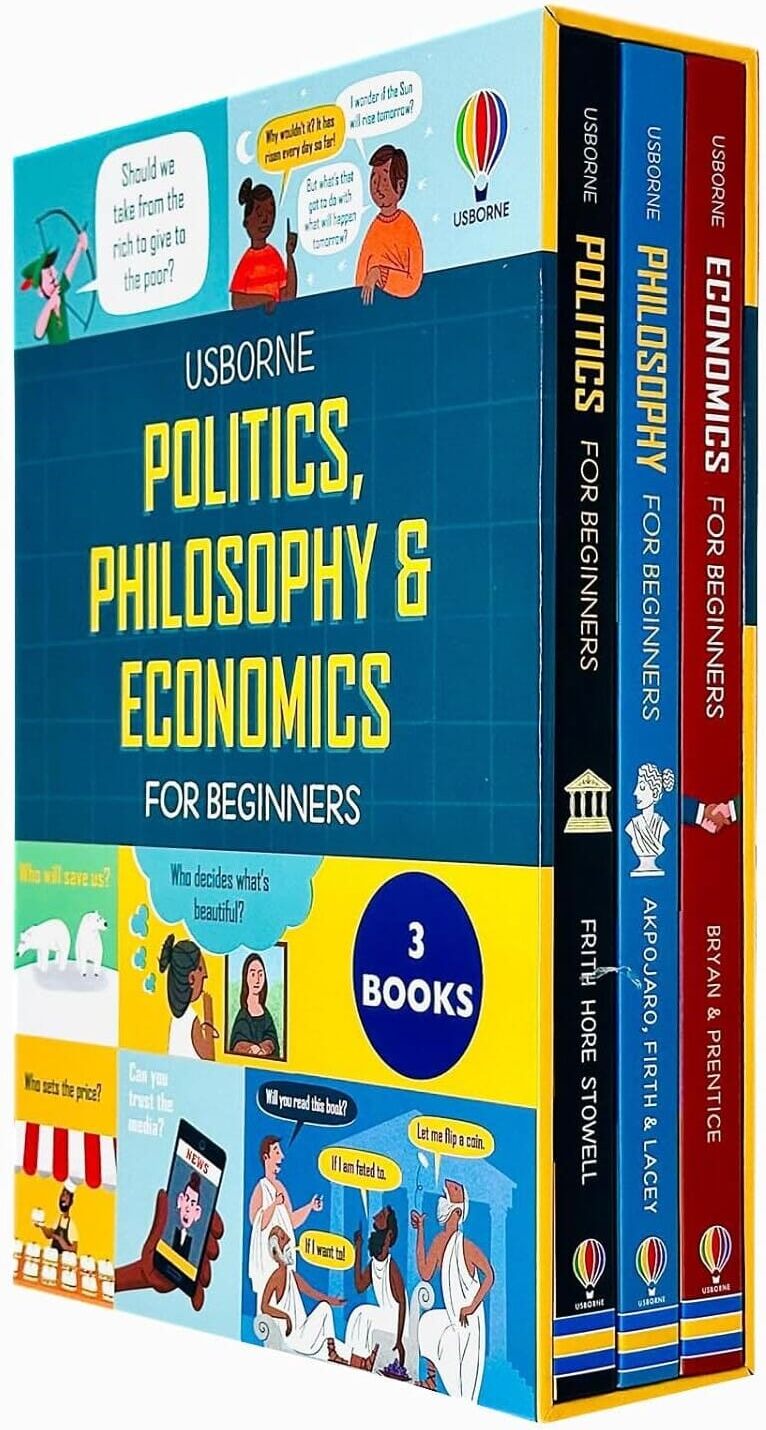
Usborne For Beginners Series: Politics, Philosophy and Economics 3 Books Collection Box Set - Ages 11+ - Hardback Usborne Publishing LtdTitles in this set: 1. Politics for Beginners 2. Philosophy for Beginners 3. Economics for Beginners Politics for Beginners An informative guide to political systems, elections, voting and government, and issues including feminism, human rights, freedom of speech and fake news, all explained with clear text and bright, infographic-style illustrations. Includes tips on how to argue and debate, a glossary, and links to specially selected websites with more information. Philosophy for Beginners Philosophy is a way of thinking about just about anything. It asks big questions, such as "how can I be good?" or "what makes something beautiful?" Using lively examples, humorous illustrations and simple thought experiments, this book opens up the world of philosophy to both children and adults and includes links to recommended websites with videos, games and activities to find out more. Economics for Beginners Nobody has everything they need, all the time - so how can we make do with what we have? Economics is all about understanding the choices we make to solve this problem. With bright, infographics pictures, this informative book describes why markets are so important, how businesses work out what to sell, and how governments choose how to run a country. Includes Usborne Quicklinks to specially selected websites for more information.14,95 £*Shipping: 2,99 £Secure redirect to the provider
-
Is linguistic fluency, or eloquence, determined by genetics?
Linguistic fluency or eloquence is not solely determined by genetics. While some individuals may have a genetic predisposition towards language skills, environmental factors such as upbringing, education, and exposure to different languages play a significant role in developing linguistic abilities. Practice, exposure, and effort are also crucial in improving one's fluency and eloquence in a language. Ultimately, a combination of genetic factors and environmental influences contribute to an individual's linguistic abilities. **
-
What is the difference between eloquence and manipulation?
Eloquence is the ability to speak or write in a persuasive and articulate manner, using language effectively to convey one's thoughts and ideas. It is often associated with sincerity and authenticity, aiming to inspire or persuade others through the power of language. On the other hand, manipulation involves using language or other tactics to control or influence others for personal gain, often without their knowledge or consent. It can be deceptive and coercive, aiming to exploit or deceive others for one's own benefit. In essence, eloquence seeks to inspire and persuade through genuine communication, while manipulation seeks to control and influence for selfish motives. **
-
What is the meaning of foreign words and eloquence?
Foreign words refer to words that come from a language other than the one being spoken or written. Eloquence, on the other hand, refers to the ability to speak or write fluently and persuasively. When foreign words are used in a language, they can add depth, nuance, and sophistication to the communication, enhancing the speaker's eloquence and making their message more impactful. The use of foreign words and eloquence can also demonstrate a speaker's cultural awareness, education, and mastery of language. **
-
Can one improve their eloquence by regularly watching the show "Hart aber fair"?
Regularly watching the show "Hart aber fair" can potentially help improve one's eloquence as it exposes viewers to a variety of topics and discussions, which can expand their vocabulary and knowledge. By listening to the debates and arguments presented on the show, individuals can learn how to articulate their thoughts more effectively and develop their communication skills. However, improving eloquence also requires practice and active engagement in conversations and debates outside of just watching the show. **
* All prices are inclusive of VAT and, if applicable, plus shipping costs. The offer information is based on the details provided by the respective shop and is updated through automated processes. Real-time updates do not occur, so deviations can occur in individual cases. ** Note: Parts of this content were created by AI.