Buy jean-lucdehaene.eu ?
We are moving the project
jean-lucdehaene.eu .
Are you interested in purchasing the domain
jean-lucdehaene.eu ?
domain@kv-gmbh.de · 0541-91531010
Buy jean-lucdehaene.eu ?
What is decompression sickness?
Decompression sickness, also known as the bends, is a condition that occurs when nitrogen bubbles form in the bloodstream and tissues as a result of rapid decompression. This can happen when a person ascends too quickly from deep water, such as in scuba diving. Symptoms can include joint pain, fatigue, dizziness, and in severe cases, paralysis or death. Treatment typically involves re-compressing the diver in a hyperbaric chamber to reduce the nitrogen bubbles in the body. **
What are decompression stops in diving?
Decompression stops in diving are pauses that divers must make during their ascent to the surface in order to allow their bodies to safely release excess nitrogen absorbed during the dive. These stops are necessary when divers have been at depths that require them to breathe compressed air, as the nitrogen in the air can form bubbles in the bloodstream if not released gradually. Decompression stops are typically made at specific depths and durations, as determined by dive tables or dive computers, and are crucial for preventing decompression sickness, also known as "the bends." **

Similar search terms for Decompression
Top-Angebote
Products related to Decompression:
-
Uplift Treasures Silicone Sensory Decompression Board Toy blueProduct Description Encourage hands on learning and stress relief with this silicone sensory decompression board toy designed for early childhood development. Featuring soft multicolor silicone elements, it helps improve focus, fine motor skills,...42,97 $*Shipping: 0,00 $Secure redirect to the provider
-
United Printed Butterfly Fish Knife Fidget Toy Stress Relief Decompression EDC Gadget Printed Butterfly Fish Knife Fidget Toy Stress Relief Decompression EDC GadgetEscape everyday tension with a satisfying handson experience designed to calm your mind in seconds. This stress relief decompression toy blends playful motion with a unique foldingstyle fishinspired design that keeps your fingers engaged. The...31,97 $*Shipping: 0,00 $Secure redirect to the provider
-
Uplift Essentials Big Eyes Panda Decompression Toy Slow Rebound Stress Relief Squeeze Doll Big Eyes Panda Decompression Toy Slow Rebound Stress Relief Squeeze Doll"Meet your new favorite desk companion and stressbuster! The Big Eyes Panda Decompression Toy is an innovative, highquality pinch toy designed to turn your tension into a smile. When squeezed, this adorable panda features a hilarious ""eyepopping""..."36,97 $*Shipping: 0,00 $Secure redirect to the provider
-
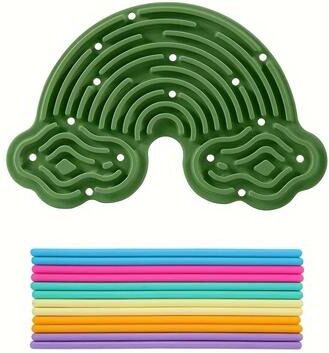
Uplift Treasures Silicone Sensory Decompression Board Toy greenProduct Description Encourage hands on learning and stress relief with this silicone sensory decompression board toy designed for early childhood development. Featuring soft multicolor silicone elements, it helps improve focus, fine motor skills,...42,97 $*Shipping: 0,00 $Secure redirect to the provider



-
Can you get decompression sickness while snorkeling?
Yes, it is possible to get decompression sickness while snorkeling, although it is rare. Snorkeling involves diving to shallow depths and then returning to the surface, which can lead to changes in pressure that may cause nitrogen bubbles to form in the body. This can result in symptoms of decompression sickness, such as joint pain, dizziness, and difficulty breathing. To reduce the risk of decompression sickness while snorkeling, it is important to ascend slowly and avoid making rapid changes in depth. **
-
What is a rapid decompression in a vacuum?
A rapid decompression in a vacuum occurs when the pressure inside a sealed environment suddenly drops, causing the air and gases inside to rapidly expand. This can happen in a spacecraft or a pressurized cabin if there is a breach in the hull, causing the air to rush out into the vacuum of space. The rapid expansion of air can lead to a variety of dangerous effects, including the potential for explosive decompression, the formation of air embolisms in the bloodstream, and the risk of suffocation. Rapid decompression in a vacuum is a serious hazard for astronauts and anyone else in a pressurized environment in space. **
-
What is the reverse version of decompression sickness?
The reverse version of decompression sickness is known as compression sickness or barotrauma. This occurs when a person is subjected to a rapid increase in pressure, such as when ascending quickly from a deep dive or ascending in an airplane. The rapid change in pressure can cause gas bubbles to form in the body, leading to symptoms such as joint pain, dizziness, and difficulty breathing. Compression sickness can be prevented by ascending slowly and allowing the body to adjust to the changing pressure. **
-
Does the decompression valve of the Hercules Prima not work?
The decompression valve of the Hercules Prima does work, but it may not function properly if it is damaged or clogged. If the decompression valve is not working as it should, it may result in difficulty starting the engine or poor performance. It is important to regularly inspect and maintain the decompression valve to ensure it is functioning correctly. If there are issues with the decompression valve, it should be repaired or replaced by a qualified mechanic. **


What can cause decompression sickness if the safety stop is skipped?
Skipping the safety stop can cause decompression sickness due to the rapid ascent of the diver to the surface. During the safety stop, nitrogen bubbles that have accumulated in the diver's body tissues are given time to slowly release, reducing the risk of decompression sickness. By skipping this stop, the nitrogen bubbles do not have enough time to off-gas, increasing the likelihood of decompression sickness occurring. It is important for divers to follow proper dive procedures, including safety stops, to minimize the risk of decompression sickness. **
Do you need to go into a decompression chamber after a deep-sea submarine ride?
Yes, after a deep-sea submarine ride, it is recommended to go into a decompression chamber to slowly return to surface pressure and prevent decompression sickness. The high pressure experienced during the deep-sea dive can cause nitrogen to dissolve in the body tissues, and a rapid return to the surface can lead to the formation of nitrogen bubbles in the bloodstream, which can be dangerous. Therefore, a gradual return to surface pressure in a decompression chamber is necessary to safely off-gas the nitrogen from the body. **
Top-Angebote
Products related to Decompression:
-
Uplift Treasures Black Walnut Cartoon Snail Decompression Insulated Tea Coaster Black Walnut Cartoon Snail Decompression Insulated Tea CoasterProduct Description: Add a touch of whimsy and warmth to your drink moments with this 2025 New Fashion Black Walnut Cartoon Snail Coaster. Crafted from natural black walnut wood and shaped with a cute snail motif, this creative tea and coffee cup...77,97 $*Shipping: 0,00 $Secure redirect to the provider
-
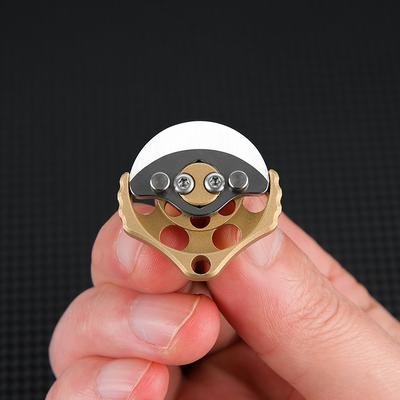
ModernMart Mini EDC Keychain Knife Portable Brass Blade & Decompression Toy Mini EDC Keychain Knife Portable Brass Blade & Decompression ToyTake the stress out of everyday tasks with the Mini EDC knife that fits right on your keychain. Crafted from durable brass with a precision D2 blade knife, this tiny yet powerful tool is perfect for quick opens, outdoor adventures, or as a...39,97 $*Shipping: 0,00 $Secure redirect to the provider
-
Uplift Treasures Silicone Sensory Decompression Board Toy blueProduct Description Encourage hands on learning and stress relief with this silicone sensory decompression board toy designed for early childhood development. Featuring soft multicolor silicone elements, it helps improve focus, fine motor skills,...42,97 $*Shipping: 0,00 $Secure redirect to the provider
-
United Printed Butterfly Fish Knife Fidget Toy Stress Relief Decompression EDC Gadget Printed Butterfly Fish Knife Fidget Toy Stress Relief Decompression EDC GadgetEscape everyday tension with a satisfying handson experience designed to calm your mind in seconds. This stress relief decompression toy blends playful motion with a unique foldingstyle fishinspired design that keeps your fingers engaged. The...31,97 $*Shipping: 0,00 $Secure redirect to the provider
-
What is decompression sickness?
Decompression sickness, also known as the bends, is a condition that occurs when nitrogen bubbles form in the bloodstream and tissues as a result of rapid decompression. This can happen when a person ascends too quickly from deep water, such as in scuba diving. Symptoms can include joint pain, fatigue, dizziness, and in severe cases, paralysis or death. Treatment typically involves re-compressing the diver in a hyperbaric chamber to reduce the nitrogen bubbles in the body. **
-
What are decompression stops in diving?
Decompression stops in diving are pauses that divers must make during their ascent to the surface in order to allow their bodies to safely release excess nitrogen absorbed during the dive. These stops are necessary when divers have been at depths that require them to breathe compressed air, as the nitrogen in the air can form bubbles in the bloodstream if not released gradually. Decompression stops are typically made at specific depths and durations, as determined by dive tables or dive computers, and are crucial for preventing decompression sickness, also known as "the bends." **
-
Can you get decompression sickness while snorkeling?
Yes, it is possible to get decompression sickness while snorkeling, although it is rare. Snorkeling involves diving to shallow depths and then returning to the surface, which can lead to changes in pressure that may cause nitrogen bubbles to form in the body. This can result in symptoms of decompression sickness, such as joint pain, dizziness, and difficulty breathing. To reduce the risk of decompression sickness while snorkeling, it is important to ascend slowly and avoid making rapid changes in depth. **
-
What is a rapid decompression in a vacuum?
A rapid decompression in a vacuum occurs when the pressure inside a sealed environment suddenly drops, causing the air and gases inside to rapidly expand. This can happen in a spacecraft or a pressurized cabin if there is a breach in the hull, causing the air to rush out into the vacuum of space. The rapid expansion of air can lead to a variety of dangerous effects, including the potential for explosive decompression, the formation of air embolisms in the bloodstream, and the risk of suffocation. Rapid decompression in a vacuum is a serious hazard for astronauts and anyone else in a pressurized environment in space. **
Similar search terms for Decompression
-
Uplift Essentials Big Eyes Panda Decompression Toy Slow Rebound Stress Relief Squeeze Doll Big Eyes Panda Decompression Toy Slow Rebound Stress Relief Squeeze Doll"Meet your new favorite desk companion and stressbuster! The Big Eyes Panda Decompression Toy is an innovative, highquality pinch toy designed to turn your tension into a smile. When squeezed, this adorable panda features a hilarious ""eyepopping""..."36,97 $*Shipping: 0,00 $Secure redirect to the provider
-
Uplift Treasures Silicone Sensory Decompression Board Toy greenProduct Description Encourage hands on learning and stress relief with this silicone sensory decompression board toy designed for early childhood development. Featuring soft multicolor silicone elements, it helps improve focus, fine motor skills,...42,97 $*Shipping: 0,00 $Secure redirect to the provider
-
Uplift Treasures Silicone Sensory Decompression Board Toy sky BlueProduct Description Encourage hands on learning and stress relief with this silicone sensory decompression board toy designed for early childhood development. Featuring soft multicolor silicone elements, it helps improve focus, fine motor skills,...42,97 $*Shipping: 0,00 $Secure redirect to the provider
-
Uplift Treasures Silicone Sensory Decompression Board Toy rose RedProduct Description Encourage hands on learning and stress relief with this silicone sensory decompression board toy designed for early childhood development. Featuring soft multicolor silicone elements, it helps improve focus, fine motor skills,...42,97 $*Shipping: 0,00 $Secure redirect to the provider
-
What is the reverse version of decompression sickness?
The reverse version of decompression sickness is known as compression sickness or barotrauma. This occurs when a person is subjected to a rapid increase in pressure, such as when ascending quickly from a deep dive or ascending in an airplane. The rapid change in pressure can cause gas bubbles to form in the body, leading to symptoms such as joint pain, dizziness, and difficulty breathing. Compression sickness can be prevented by ascending slowly and allowing the body to adjust to the changing pressure. **
-
Does the decompression valve of the Hercules Prima not work?
The decompression valve of the Hercules Prima does work, but it may not function properly if it is damaged or clogged. If the decompression valve is not working as it should, it may result in difficulty starting the engine or poor performance. It is important to regularly inspect and maintain the decompression valve to ensure it is functioning correctly. If there are issues with the decompression valve, it should be repaired or replaced by a qualified mechanic. **
-
What can cause decompression sickness if the safety stop is skipped?
Skipping the safety stop can cause decompression sickness due to the rapid ascent of the diver to the surface. During the safety stop, nitrogen bubbles that have accumulated in the diver's body tissues are given time to slowly release, reducing the risk of decompression sickness. By skipping this stop, the nitrogen bubbles do not have enough time to off-gas, increasing the likelihood of decompression sickness occurring. It is important for divers to follow proper dive procedures, including safety stops, to minimize the risk of decompression sickness. **
-
Do you need to go into a decompression chamber after a deep-sea submarine ride?
Yes, after a deep-sea submarine ride, it is recommended to go into a decompression chamber to slowly return to surface pressure and prevent decompression sickness. The high pressure experienced during the deep-sea dive can cause nitrogen to dissolve in the body tissues, and a rapid return to the surface can lead to the formation of nitrogen bubbles in the bloodstream, which can be dangerous. Therefore, a gradual return to surface pressure in a decompression chamber is necessary to safely off-gas the nitrogen from the body. **
* All prices are inclusive of VAT and, if applicable, plus shipping costs. The offer information is based on the details provided by the respective shop and is updated through automated processes. Real-time updates do not occur, so deviations can occur in individual cases. ** Note: Parts of this content were created by AI.